
![THE HERALD STUDENT REPORTERS [US]](/assets/images/logo_student_us.png)
![THE HERALD STUDENT REPORTERS [Canada]](/assets/images/logo_student_ca.png)

How smaller class sizes could benefit both students and teachers
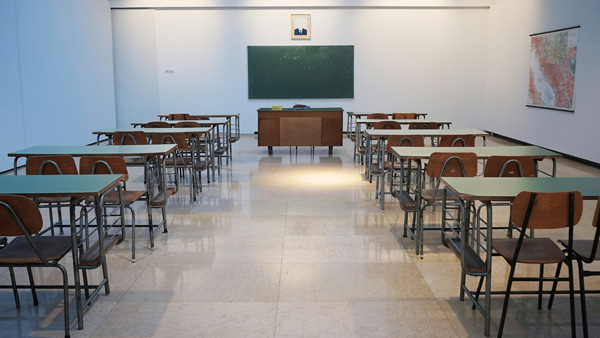
[Empty classroom. Photo Credit to Unsplash]
In February 2025, The Canadian Teachers Federation surveyed nearly 7,000 people who work in Canadian schools, examining how class size and classroom complexity affect teachers’ working conditions.
The main findings of this survey revealed that as class sizes continue to rise, complexity is escalating, and the time teachers have to teach is shrinking.
Together, these factors are merging to reshape the learning environments for countless students while simultaneously pushing educators to their breaking point.
A typical classroom is filled with different personalities, learning styles, and academic needs, and managing all these differences becomes challenging when one teacher is responsible for dozens of students.
Class size is more than just a number on a school list.
It influences how much time teachers have with individual students, their academic performance, and how manageable a classroom feels throughout the day.
When a teacher has to divide their attention among a large number of students, it becomes much more difficult to recognize when someone is struggling, answer every question, or provide the individual support that students need.
With fewer students in the classroom, teachers are able to monitor students more easily.
According to the Canadian Teachers Federation, one in four minutes is wasted due to behaviour management from kindergarten to grade 6, and across all grades, direct instruction accounts for just around 36% of class time.
This demonstrates how much of a teacher’s time can be taken away from actual instructions and student support.
In a smaller classroom, teachers can spend more time observing students and identifying when they are confused, distracted, or falling behind.
Smaller classes can also improve students’ academic performance by allowing teachers to provide faster and more personalized feedback.
When students receive feedback promptly, they can fix and identify their mistakes more efficiently, leading to higher test scores and deeper understanding of the topic.
This is especially important as 80% of educators report not having enough access to specialized support, including educational assistants, resource teachers, psychologists, and behaviour interventionists.
With fewer students in the classroom, teachers may have more time to address individual learning needs and provide students with support.
Additionally, when a teacher has fewer papers to grade and fewer students to manage, the entire learning cycle becomes more manageable.
With fewer students in the classroom, there are fewer distractions, and teachers can deliver lessons more efficiently.
This can also relate to students’ participation, as some students may avoid raising their hands because they do not feel comfortable speaking in a large group.
This is extremely important since learning is not just about listening and completing assignments.
Asking questions, explaining an idea, and discussing different perspectives on a topic can help students think more deeply.
The debate over whether class sizes should be larger or smaller has been a widely discussed topic in modern education.
Smaller classes create a more organized and productive environment that allows teachers to manage their students more efficiently, while students receive better support.
Ultimately, as education becomes increasingly critical for people, creating a supportive and organized learning environment is essential to their success.

- Raina Lee / Grade 9 Session 8
- Abbey Park High School