
![THE HERALD STUDENT REPORTERS [US]](/assets/images/logo_student_us.png)
![THE HERALD STUDENT REPORTERS [Canada]](/assets/images/logo_student_ca.png)

Helping others may be linked to healthier brain aging, study finds
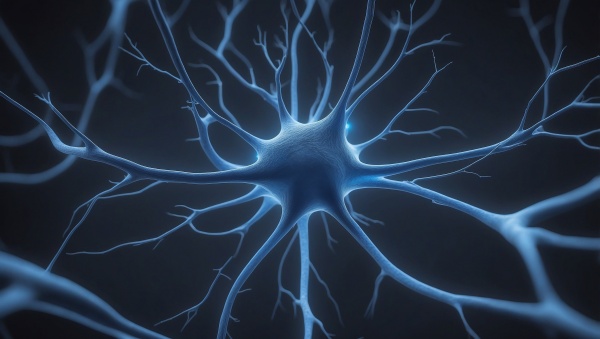
[Neurons, Credit to Pixabay]
On September 28, 2026, a study published in Translational Psychiatry discovered that adults who spent more time providing emotional and practical support to others tended to have brains that appeared younger than their chronological age.
While much of the research on the association with better health and longer life with social connections has focused on the benefits people receive from having others available to help them, the study approaches the question from the opposite direction: Could providing support to other people also be connected to healthier aging?
The research was conducted by Minwoo Lee and colleagues from Georgetown University, Emory University, and the University of Wisconsin–Madison.
The researchers utilized data from the Midlife in the United States, or MIDUS, study, a long-running project that examines health and well-being across adulthood.
Rather than simply classifying participants as caregivers or non-caregivers, the researchers focused on the amount of time people reported spending each month helping others.
Support included both emotional assistance and practical forms of aid.
Researchers then compared these behaviors with a measure known as the brain age estimation gap, or BrainAGE.
BrainAGE employs structural magnetic resonance imaging, commonly known as MRI, and a machine-learning model to estimate how old a person's brain appears based on its physical characteristics.
The estimated brain age can then be compared to the person's actual chronological age.
A brain estimated to be younger than a person's chronological age does not literally mean the individual has reversed aging.
Rather, BrainAGE provides researchers with a way to examine patterns of structural brain aging.
The study revealed that individuals who reported dedicating more time to supporting others tended to have lower BrainAGE values, meaning their brains appeared younger relative to their actual ages.
Crucially, this association persisted even after the researchers accounted for a wide range of other factors that could influence health and aging.
These included demographic characteristics, pre-existing health conditions, lifestyle behaviors, broader social and psychological circumstances, and the amount of social support participants themselves received.
The findings also suggested that simply identifying someone as a caregiver may not capture the full relationship between helping behavior and brain aging.
The number of hours spent providing support offered additional insight beyond categories such as being a caregiver or grandparent.
Another significant finding came from examining different forms of support.
In exploratory analyses, emotional support showed a stronger relationship with younger brain age than instrumental assistance.
Emotional support encompasses actions such as listening to someone, offering reassurance, or being available during difficult experiences.
The result raises questions about whether the social and emotional aspects of helping others could play a particular role in healthy aging, although further research is needed to understand the mechanisms involved.
The study does not establish that helping others directly causes the brain to age more slowly.
Because the research is observational, other characteristics could contribute to both a person's ability to provide support and their brain health.
For instance, healthier individuals may simply have more opportunities or energy to help others.
The researchers therefore describe support provision as a potential pathway related to neuroprotection rather than as evidence of a proven anti-aging intervention.
As global populations continue to age, understanding behaviors associated with maintaining brain health has become increasingly important.
Future studies will be needed to determine whether providing social support itself produces changes in brain aging and to identify the biological or psychological processes that might explain the association.
For now, the research presents an intriguing possibility: supporting others may be connected not only to the well-being of those receiving help, but also to the aging process of those providing it.

- Yezi Jang / Grade 12
- Asia American International Academy