
![THE HERALD STUDENT REPORTERS [US]](/assets/images/logo_student_us.png)
![THE HERALD STUDENT REPORTERS [Canada]](/assets/images/logo_student_ca.png)

Gut bacteria may help treat food allergies
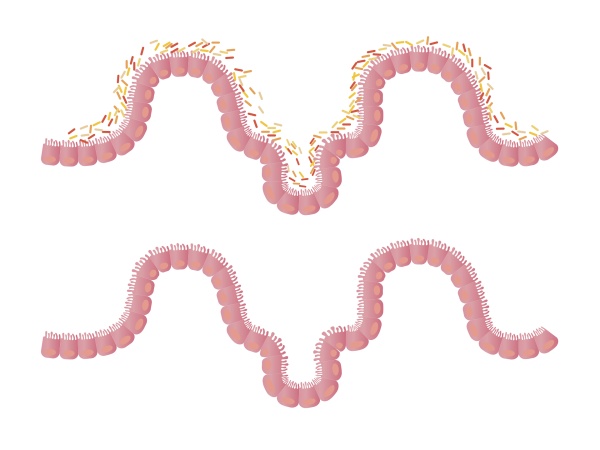
[Gut Bacteria. Photo Credit to Pixabay]
On August 5, 2026, Nature reported promising results from the first human study testing fecal microbiota transplantation, or FMT, as a possible treatment for food allergies.
In the small Phase I study, published in Science Translational Medicine, 15 adults with severe peanut allergies received oral FMT, and six were able to tolerate more peanut protein before having an allergic reaction.
Following treatment, six participants were able to tolerate more peanut protein before having an allergic reaction.
Food allergies occur when the immune system reacts to food that would normally be harmless, sometimes causing serious reactions such as anaphylaxis.
Management of food allergies primarily involves avoiding allergens and using epinephrine during severe reactions.
Oral immunotherapy, or OIT, can also help some patients tolerate larger amounts of an allergen by slowly exposing them to increasing amounts under medical supervision.
Because these approaches do not necessarily eliminate the allergy, researchers continue to search for new treatments.
One area receiving increasing attention is the gut microbiome, the community of microorganisms living in the digestive system. Gut microbes aid in digestion and also interact with the immune system.
Earlier studies offered promising insights into the link between gut bacteria and food allergies. A 2018 study found differences in the gut microbiomes of children with and without egg allergy, while a 2019 study showed that certain bacteria could reduce food-allergy reactions in mice.
In the 2026 study, researchers transferred microorganisms from carefully screened healthy donors to adults with peanut allergies using frozen capsules that participants swallowed.
Before treatment, all 15 participants reacted to 100 milligrams or less of peanut protein.
Four months after FMT, five participants could tolerate at least 600 milligrams of peanut protein, while another could tolerate 300 milligrams.
This does not mean that their peanut allergies disappeared, however.
Instead, the results indicated that FMT increased the amount of peanut some participants could tolerate before reacting.
Researchers also found that changes in specific gut bacteria and substances called bile acids may influence how the immune system responds to food.
However, the findings are preliminary.
The study was a Phase I open-label trial with only 15 participants and no placebo control group.
Due to the small sample size and lack of a placebo control group, researchers cannot yet determine how reliably FMT caused the improvement or whether similar results would appear in a larger group of patients.
The treatment was generally well tolerated, with no major safety problems reported in this small study.
However, larger studies are still required to better understand possible rare or long-term side effects.
Scientists also need to understand why the treatment worked for some people but not others and how long the effects may last.
Most importantly, FMT is not currently an approved treatment for food allergies. The study should therefore be viewed as early evidence of a possible new approach rather than proof of a cure.
Researchers are already investigating this approach in a Phase II clinical trial for people with peanut allergy.
The Phase II study, which includes a placebo group, is designed to provide stronger evidence about whether microbiota transplantation can safely and effectively increase peanut tolerance.
In the future, scientists may not need to transfer an entire community of gut microorganisms.
Instead, if researchers can identify the specific beneficial bacteria or substances that help control allergic reactions, they may be able to develop more targeted microbiome-based treatments.
In the meantime, avoiding allergens and preparing for accidental exposure remain important parts of managing food allergies.
But the new study suggests that future treatments may come from an unexpected place: the trillions of microorganisms already living inside the human gut.
Could changing the gut bacteria someday revolutionize the way food allergies are treated?

- Esther Kim / Grade 11 Session 13
- Lexington High School