
![THE HERALD STUDENT REPORTERS [US]](/assets/images/logo_student_us.png)
![THE HERALD STUDENT REPORTERS [Canada]](/assets/images/logo_student_ca.png)

China’s CXMT IPO shakes memory chip market as SK hynix experiences decline
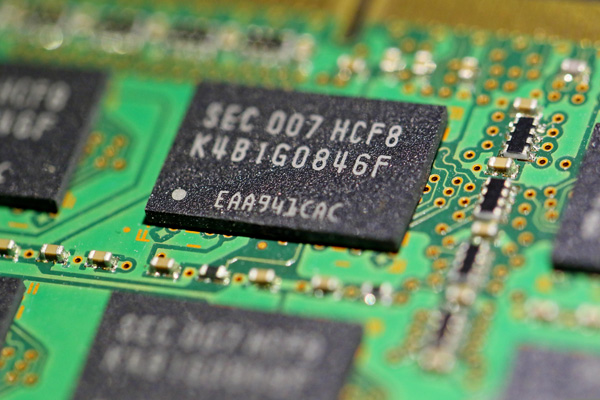
[Image of semiconductor, integrated circuit. Photo credits to Pixabay]
On July 27th, Beijing-based memory chipmaker ChangXin Memory Technologies (CXMT) had successfully raised 12.56 trillion won in an initial public offering (IPO) shortly before the shares of South Korean semiconductor giant SK hynix plunged nearly 14% on that day as investors became worried about how China expanding its chip industry could change the global memory market.
This sudden market reaction underscores the intensifying competition between China and current leaders of the semiconductor industry, including South Korea’s Samsung Electronics and SK hynix, along with NVIDIA.
An IPO allows a private firm to raise capital funds from public investors by offering shares through an exchange.
Thereby, the company has access to an influx of new funds that can aid continued development.
The listing also provided CXMT with ample funding to expand its chip assembly capacity and advance China’s long-term ambition to become more independent in the global semiconductor market.
A year into its launch in 2016, CXMT has already emerged as the largest Chinese manufacturer of dynamic random-access memory (DRAM), the type of computer chip that is used in smartphones, computers and artificial intelligence (AI).
Within a year, CXMT has expanded its share of the global DRAM market from three to eight percent.
According to Counterpoint Research, they also became fourth in global market share, following industry leaders Samsung Electronics, SK hynix, and Micron.
The rapid growth by CXMT will gain considerable attention as memory chips become an even more integral component in the future of the AI industry.
Given that the trend will lead to greater use of computations, the demand for more sophisticated technology for semiconductor production will heighten competition among the global companies manufacturing chips.
CXMT’s IPO also left many investors wondering whether China’s expanding semiconductor industry can compete with the companies that have dominated the memory field for decades.
A share value decrease by nearly 13% was observed at Samsung Electronics’ closing on its IPO, and a significant fall was recorded at SK hynix despite the high demand for memory chips.
SK Group Chairman Chey Tae-won addressed the downturn by purchasing 4.9 billion won worth of SK hynix shares, asserting that the recent stock drop does not accurately reflect the competitiveness of the company.
However, despite CXMT’s accelerated progress, analysts maintain that CXMT still has hurdles to overcome before it can be considered a rival to current leaders in the market.
One major gap remains in advanced memory technology necessary for AI applications.
Samsung Electronics and SK hynix both hold strong footholds in providing memory chips for AI, while CXMT has so far maintained focus on more traditional memory devices.
The rise of CXMT can also be perceived as part of Beijing’s ongoing efforts to foster an indigenous domestic technology sector.
CXMT’s successful IPO demonstrated that China’s semiconductor ambitions cannot be dismissed.
While the rapid development of CXMT does not present an immediate threat to Samsung Electronics and SK hynix, its market performance indicates that investors no longer consider China a far-off competitor, but a tangible threat that could redefine the market.
As artificial intelligence technology demands chips with greater functionality, the struggle over these semiconductor devices transcends corporate profits.
It has become a global race concerning technology, economic security, and especially the future of national strategy.
CXMT’s IPO has been far more than a financial breakthrough for a Chinese chipmaker. It has represented a turning point at which the trajectory of the semiconductor industry is increasingly entangled with the overall struggle among nations to assert influence over the technologies that will shape future innovation.

- Isabel Jeong / Grade 9
- Chadwick International School