
![THE HERALD STUDENT REPORTERS [US]](/assets/images/logo_student_us.png)
![THE HERALD STUDENT REPORTERS [Canada]](/assets/images/logo_student_ca.png)

Junk DNA may have been the key to Alzheimer’s disease
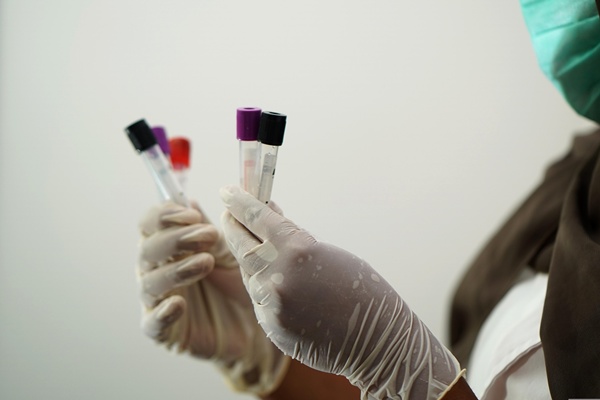
[Test tubes. Photo Credit to Pixabay]
On December 19th, 2025, a groundbreaking study on the correlation between enhancers located in the non-coding DNA and Alzheimer’s disease was published in the Nature Neuroscience.
Most people believe DNA is fully structured of genes coding physical features, personality, as well as maintaining healthy cells and organs.
However, in reality, it has been said only 2% of our DNA contains our genes, while the remaining 98%, usually referred to as the non-coding DNA, or the ‘junk’ DNA.
The junk DNA is said to have no actual genes, switches which control the timing and intensity of gene expression, usually called enhancers.
Researchers from New South Wales (UNSW) in Australia had identified over 150 control signals in specialized brain cells called astrocytes, an enhancer that provides essential support to a type of neuron, and affects gene activity in cells.
In Alzheimer’s disease, these signals typically become damaged, leading to harmful effects.
Not only this, but these assistant cells have been previously linked to the disease, making it crucial to understand deeply when it comes to finding cures for the diseases.
The team combined usage of a tool called CRISPRi, which could mute DNA sections without having to permanently cut them, and single cell RNA sequencing, which measured the gene expression in each individual cell – in this case, human astrocytes grown in the lab.
This approach had allowed the team to test the function of nearly 1000 enhancers simultaneously, which were thought to be harbor entrances.
Nicole Green, a molecular geneticist from UNSW, had said, “We used CRISPRi to turn off potential enhancers in the astrocytes to see whether it changed gene expression.”
Due to the placement of enhancers situated far from the genes they controlled, it was more difficult to study and catalog – making direct evidence of connectivity and signaling across the genome significant.
It had been said that they had eliminated several enhancers based on their functionality, and the gene it had controlled, narrowing down the list from 1000 to 150.
Cutting down the list had reduced search area for non-coding genomes for finding clues which had correlation with Alzheimer’s disease
Reports also show how this study marked the first time a CRISPRi screen of enhancers in brain cells had been done on this scale, showing its high significance.
This breakthrough allows scientists to predict which potential enhancers are true switches, possibly saving years of experimental time.
Not only this, but Irina Voineagu, the molecular biologist from UNSW who had overseen the study, remarked on how the results could be useful for interpreting other genetic research, explaining results from studies searching for disease-related genetic changes.
However, the most groundbreaking moment scientists thought had been when the dataset had been used to train computer tools.
"When researchers look for genetic changes that explain diseases like hypertension, diabetes – and also psychiatric and neurodegenerative disorders like Alzheimer's disease – we often end up with changes not within genes so much, but in-between," Professor Voineagu had said.
Her team had already tested the ‘in-between’ stretches in human astrocytes, which had also shown which enhancers genuinely controlled crucial brain genes.
Disregarding the fact that the disease is incredibly complex, with astrocytes and genes related as just a part of a bigger picture, the study represented another big step in understanding genes involved in Alzheimer's.
Scientists are now planning to use this study in future treatments, while Dr. Green adds that the research is a “promising direction for precision medicine.”
To add on, as different enhancers work in different cell types, scientists are hoping that one day it would be possible to control specific genes only in certain brain cells, without affecting others.
Not only this, but with potential sequences identified, AI systems may be trained to spot more enhancers, making creation of DNA wiring maps more efficient — with Google's DeepMind team already leveraging the dataset to benchmark their recent deep learning model, AlphaGenome.
However, researchers first have to note enhancers identified are more specific to astrocytes, and experiments are required in order to determine if these enhancers function in the same manner when astrocytes become overactive – as they do in Alzheimer's.
Dr. Green added, “This is something we want to look at more deeply: finding out which enhancers we can use to turn genes on or off in a single brain cell type, and in a very controlled way.”

- Eunseo Choi / Grade 8
- Seoul Foreign School