
![THE HERALD STUDENT REPORTERS [US]](/assets/images/logo_student_us.png)
![THE HERALD STUDENT REPORTERS [Canada]](/assets/images/logo_student_ca.png)

New study finds that Alzheimer's jumbles memories while the brain rests
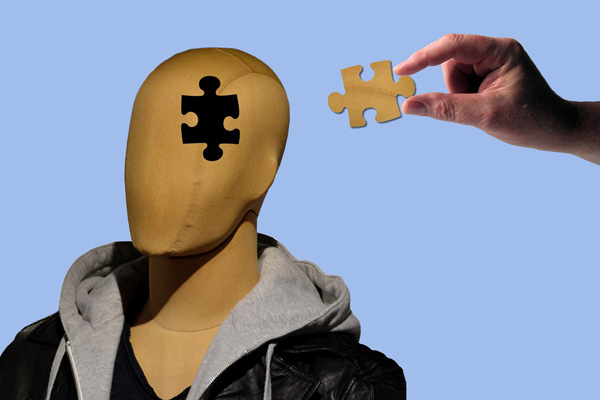
[Mannequin brain puzzle. Photo Credit: Pixabay]
According to a new study published on February 1st, Alzheimer's disease-related memory issues could be caused by a malfunction in the brain's ability to recall recent events while at rest.
University College London (UCL) researchers' work, which was carried out on mice, suggests a malfunction in a brain mechanism that typically aids in memory consolidation and preservation.
The research, which was published in Current Biology, may help in the creation of new medications that specifically target this broken mechanism.
The study could also serve as a guide for developing new instruments to identify Alzheimer's earlier than is now feasible.
Co-lead author Dr. Sarah Shipley of the University College London Cell & Developmental Biology explained that Alzheimer's disease is driven by the accumulation of damaging proteins and plaques in the brain.
These changes lead to symptoms such as memory loss and difficulty navigating familiar environments, but the exact mechanisms by which these plaques disrupt normal brain activity are still being investigated.
Although it remains unclear exactly how these plaques interfere with regular brain functions, Alzheimer's disease is brought on by the accumulation of toxic proteins and plaques in the brain, which causes symptoms like memory loss and trouble navigating.
In order to pinpoint the cause of these symptoms, the researchers sought to comprehend how brain cell function changes as the illness progresses.
Humans' brains typically replay recent events during sleep, a process believed to be crucial for the formation and maintenance of memories.
The study found that mice designed to acquire the amyloid plaques that characterize Alzheimer's disease have a malfunction in this replay mechanism, which is linked to the animals' poor performance on memory tests.
The hippocampus, a region of the brain crucial to memory and learning, is where this replay activity occurs.
Certain neurons called place cells fire in quick bursts during sleep that reflect recent events.
In order to better understand this process, researchers recorded brain activity while testing mice's performance in a basic labyrinth.
As the mice investigated and then relaxed, they were able to simultaneously monitor approximately 100 individual place cells using specialized electrodes.
Using this method, the research team was able to compare the replay patterns of the brain in mice that had developed Alzheimer's disease-related amyloid pathology with those of normal animals.
The appearance of memory replay was significantly altered in mice with amyloid plaques.
While the frequency of replay occurrences was the same as in healthy mice, but the underlying patterns were disorganized.
Instead of reinforcing memories, the place cells' coordinated activity became disorganized.
Additionally, the scientists observed that the damaged mice's place cells become less stable over time.
Particularly after rest periods, when replay should typically reinforce memory signals, individual neurons ceased reliably expressing the same locations.
Researchers discovered a breakdown in the way the brain consolidates memories, which is evident at the level of individual neurons.
This demonstrates a failure in memory consolidation as replay occurrences still happen, but they no longer have the same structure, which is startling.
The brain is still attempting to consolidate memories, but the process has gone awry.
These results offer potential avenues for the early detection of Alzheimer's disease or the development of therapies that aim to restore normal replay activity.

- Hyeonji Nam / Grade 11
- Chadwick International