
![THE HERALD STUDENT REPORTERS [US]](/assets/images/logo_student_us.png)
![THE HERALD STUDENT REPORTERS [Canada]](/assets/images/logo_student_ca.png)

Shingle vaccines may be the solution to dementia
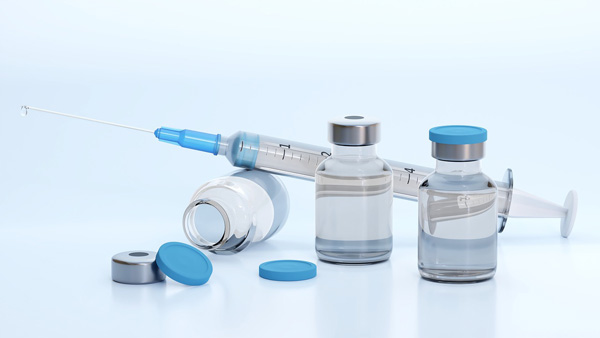
[Syringe, Vaccine, Medical image. Photo Credit to Pixabay]
On April 2nd, 2025, the journal Nature published a groundbreaking study presenting the closest evidence between the correlation of shingle vaccines and dementia.
Dementia, affecting more than 55 million people globally and being the leading cause of death in the United Kingdom, is a group of brain diseases which currently has no treatment available.
It describes a group of symptoms and has a variety of diseases that lead to it, with Alzheimer's disease being one of the most common causes.
Although there are a few approved drugs and treatments which have been discovered to slow down the disease, and improve the quality of life.
However, dementia currently has no available cure, and has been found to progressively worsen over time.
Fortunately, recent research has uncovered the strongest evidence that shingle vaccines may reduce the risks of developing dementia.
A study conducted by researchers from Stanford University, Heidelberg Institute of Global Health and Cardiff University analyzed and examined the electronic health records of over 280,000 citizens from the Secure Anonymised Information Linkage from the vaccination rollout in Wales.
The rollout took place on September 1st, 2013, with individuals born on or after September 2nd, 1933, eligible for the Zostavax shot- a largely discontinued vaccine.
The vaccination was designed to treat viral diseases, shingles— also known as herpes zoster, which had caused painful, blistering rashes, caused by the varicella zoster— the same virus which causes chickenpox as well.
The disease is caused when the virus, after getting chickenpox, reactivates due to it not fully leaving the body, but staying dormant inside of nerve cells until immune systems start to weaken.
There had been an approximately 20 percent reduction in the risk of getting dementia over seven years in those who had been vaccinated than those who hadn’t, with the strongest effect on women.
Those who had received the vaccination were less likely to develop mild cognitive impairments, which was the earliest sign of dementia.
“It was a really striking finding,” Pascal Geldsetzer, assistant professor of medicine at Stanford and the senior author of the new study, stated.
“This huge protective signal was there, any way you looked at the data.”
He had also explained how for the first time, scientists could “say much more confidently that shingles vaccine causes a reduction in dementia risk.”
This finding had been even more important and astonishing due to failed attempts by experiments from the past, as several factors had played a key role in the cause of dementia— such as age, diet, and exercise.
Although the reasoning behind the correlation and mechanism behind the vaccine and dementia has not yet been determined, scientists have devised two theories.
One of the theories is that the vaccination was able to prevent the reactivation of herpes zoster and similar viruses which contributed to the brain inflammation and the creation of harmful proteins which are related to dementia, shown to cause long-lasting cognitive impairment and brain pathology akin to Alzheimer's disease.
On the other hand, another hypothesis suggests that the vaccine was able to boost the immune system’s recognition of the virus, as well as allow it to protect the body more efficiently.
In an accompanying article, Anupma Jena, a professor of healthcare policy at Harvard Medical School, wrote, “Although it is still unclear precisely how herpes zoster vaccination lowers the risk of dementia, the implications of the study are profound. The vaccine could represent a cost-effective intervention that has public-health benefits strongly exceeding its intended purpose.”
Currently, more research is being conducted on the relationship between the vaccine and dementia, as well as how the current shingles vaccine, Shringix, could also affect dementia.
Not only this, but more research and studies are continuously being announced and published in a variety of journals.

- Eunseo Choi / Grade 8
- Seoul Foreign School