


College athletes are getting paid directly, and some Olympic sports are already being cut
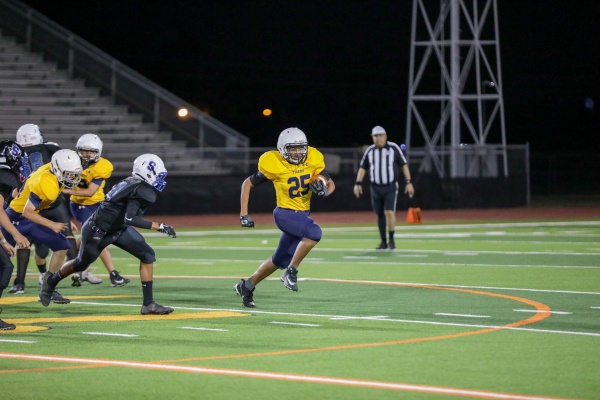
[A college football stadium — the sport that will take home three-quarters of the new revenue-sharing payments going to American college athletes. Photo Credit: Pixabay]
For the first time in modern NCAA history, college athletes in the United States are now being paid directly by their schools.
The shift came into effect on July 1, 2025, under a federal court settlement that ended decades of amateurism in American college sports.
Judge Claudia Wilken approved the agreement in House v. NCAA on June 6, 2025, following months of hearings over how athletes should be compensated for the use of their names, images, and likenesses.
Under the terms of the settlement, every participating school can share up to $20.5 million in revenue with its athletes during the 2025-26 academic year, a cap that will increase by at least four percent annually for the next decade.
The settlement also includes $2.8 billion in back pay for athletes who competed between 2016 and 2024.
By the June 30 opt-in deadline, 310 Division I athletic departments had chosen to participate and 54 opted out, including the Ivy League and the U.S. service academies.
The settlement does not mandate how schools divide the revenue, but at major football programs the expected split is roughly 75 percent to football players, 15 percent to men’s basketball, 5 percent to women’s basketball, and 5 percent to all other sports.
The initial visible effect has been inside athletic budgets, where non-revenue programs are already being cut.
In March 2025, Cal Poly San Luis Obispo discontinued both its men’s and women’s swimming and diving programs, with the school’s president citing roughly $450,000 in annual costs that no longer fit the budget.
The University of Louisiana at Monroe also eliminated women’s tennis for the 2025-26 season.
Grand Canyon University, which opted into the settlement, cut its men’s volleyball program despite the team’s recent national success.
Olympic sports, the term used for the many non-football, non-basketball college programs that contribute to Team USA, are being targeted first because they rarely bring in ticket or television revenue.
The pressure runs deeper than individual program cuts.
The lopsided revenue-sharing split, with roughly nine out of every ten dollars going to men’s football and basketball players, has already led to several Title IX lawsuits arguing that the system disadvantages female athletes.
Female athletes challenged the settlement within days of its approval, and a Ninth Circuit appeal remains undecided.
The appeal has paused the $2.8 billion back-pay portion of the settlement but has not frozen the ongoing revenue sharing, which continues at participating institutions.
Supporters of the deal contend that it addresses a long-standing imbalance.
For decades, college football and basketball players generated billions of dollars in television contracts, ticket sales, and merchandise for their schools without being paid anything beyond scholarships.
The House settlement, proponents say, finally gives those athletes a legal share of the money their labor created.
Critics, including coaches of smaller sports and some athletic directors, argue that the settlement is reshaping college athletics by starving the programs that are not profitable.
Dozens of schools across the country are reorganizing their athletic departments to fit the new budget pressure.
One year in, athletes in the biggest sports are being compensated for the first time in NCAA history.
However, dozens of smaller programs have been cut to make room for those payments.
The next ten years of the settlement will determine the future of college athletics.

- Hajin Cho / Grade 11
- The Hill School