
![THE HERALD STUDENT REPORTERS [US]](/assets/images/logo_student_us.png)
![THE HERALD STUDENT REPORTERS [Canada]](/assets/images/logo_student_ca.png)

FIFA branding restrictions force companies to get creative at the World Cup
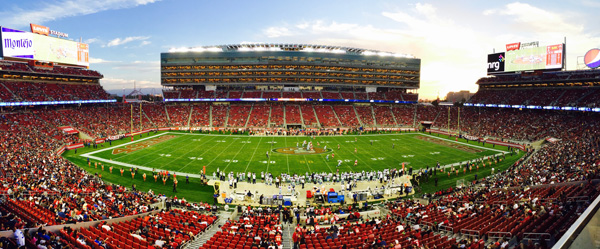
[An image of a soccer game taking place at Levi’s Stadium. Photo Credit to Pexels]
With the 2026 FIFA World Cup underway across Canada, Mexico, and the United States, several companies have flocked to the global stage to advertise.
However, FIFA’s strict regulations on unauthorized commercial branding at tournament venues have challenged non-sponsor brands to find innovative ways to capture public attention and create online buzz.
“The 2026 World Cup is expected to add about $10.5 billion in extra global advertising spending.” with sponsors including household names like Coca-Cola, Visa, and Adidas.
Campaigns included a 5-minute short film made by Adidas, featuring massive stars in both the entertainment and sports industry such as Timothee Chalamet, Lionel Messi, Bad Bunny, and Jude Bellingham.
Given the significant money invested into sponsors and advertisement, FIFA has enforced strict restrictions on unauthorized commercial branding at World Cup venues.
FIFA partner benefits include the use of official marks, stadium exposure, sponsor recognition, and ambush marketing protection.
This means companies that are not official sponsors may lose visible branding inside or around World Cup venues. However, rather than censoring discreetly, FIFA fans have been noticing extremely obvious cover ups throughout the stadiums.
On social media platforms such as TikTok, Instagram, and YouTube, new videos of clumsy censorship have been consistently uploaded.
Examples include the logo on the Levi’s stadium being covered by a massive tarp, Heinz ketchup dispensers being covered at concession stands, and most recently, every single seat in the Gillette Stadium being covered by tape to avoid showing the Gillette logo.
However, instead of media attention diverting from brands after these bans, the opposite has occurred, with people on social media immediately taking notice.
Seizing this, brands have begun to capitalize on this attention, with the most popular reaction being from Levi Strauss and Co.
Following the cover up of their logo at Levi’s stadium, the company responded by posting on Instagram a video of the wrapped up logo with the caption stating: “Welcoming the world to the beautiful [redacted] stadium!”, as well as changing their profile picture to the covered but still recognizable logo.
This playful new campaign was extremely successful, garnering millions of views online, creating instant traction for the company, and quickly becoming one of the most talked about marketing strategies of the World Cup.
Other companies, such as Gillette, have opted for a more artistic approach.
When the renowned men’s razor company was ordered to cover their logo, Gillette took notes from Levi’s social media strategy and proceeded to post on their official Instagram a picture of a computer generated cover up.
However, this time, instead of a tarp, it was a massive blob of shaving cream.
The image was labeled with emboldened words stating, “At least we got to choose how to cover it,” with the caption, “They got us too.”
Comments under the post poke fun at how despite FIFA’s best efforts, they have created massive traction for these brands, one reading: “Perhaps they don't realize it, but they are creating massive publicity for these brands.”
These creative cover ups, as well as their cheeky posts on social media, have given Gillette and Levi’s massive amounts of traction without having to be an official sponsor of the tournament itself, showing FIFA that even the absence of their logos can be just as iconic.

- Leina Park / Grade 9 Session 14
- Imagine International Academy of North Texas