
![THE HERALD STUDENT REPORTERS [US]](/assets/images/logo_student_us.png)
![THE HERALD STUDENT REPORTERS [Canada]](/assets/images/logo_student_ca.png)

Formula 1 cancels Bahrain and Saudi Grands Prix amid Gulf tensions
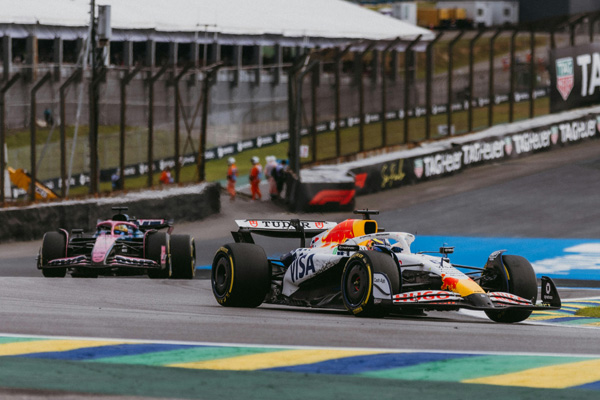
[Two Formula One cars racing on the circuit during a Grand Prix event. Photo Credit to Pexel.com]
Formula One announced on March 14th that the 2026 Bahrain and Saudi Arabian Grands Prix, originally scheduled for April, would not take place. The decision was prompted by escalating security concerns across the Gulf region, with officials citing that the safety of teams, staff, and spectators could no longer be guaranteed.
The confirmation came after several days of close monitoring by the Fédération Internationale de l'Automobile (FIA).
Formula 1 and the FIA evaluated intelligence reports and logistical updates as regional tensions intensified. The final decision was reached on March 13th before the public announcement one day later.
Both races, scheduled for April, traditionally serve as prominent early-season fixtures in the championship calendar. Their removal therefore reduces the 2026 season from originally 24 races to 22.
The cancellation creates an unusual five-week gap in the schedule, stretching from the Japanese Grand Prix at Suzuka in late March to the Miami Grand Prix in early May. This pause will be recorded as one of the longest mid-season interruptions in recent Formula 1 history.
The financial repercussions of the decision are also substantial. Analysts estimate that the sport could face losses of nearly $200 million in combined revenue, encompassing hosting fees, broadcasting contracts, sponsorship obligations, and more.
The Bahrain Grand Prix alone typically generates roughly $50 million in hosting fees.
Saudi Arabia’s event is even more profitable due to premium hospitality packages and extensive international broadcasting deals. Attendance for the Saudi (Jeddah) race regularly surpasses 150,000 spectators. In 2025, approximately 340,000 spectators attended the three-day event.
This disruption extends beyond Formula One itself. Support series scheduled to race alongside the main events have also been cancelled. For instance, Championship rounds of Formula 2, Formula 3, and F1 Academy were removed from the schedule as well.
More than 100 drivers and crew members have been directly impacted by this decision.
Logistics also played a decisive role, as Formula One teams collectively transport nearly 1000 tons of equipment around the world, with cars, spare parts, and technical systems typically shipped weeks in advance of each race.
However, ongoing regional instability regarding airport disruptions and heightened security risks made these operations increasingly challenging.
Officials briefly explored alternative venues, including European circuits such as Imola and Portimão, but ultimately rejected the idea due to tight frequent schedules, limited preparation time, and the logistical complexity of organizing large-scale events on short notice.
Formula One CEO Stefano Domenicali acknowledged the gravity of the situation, stating that although the decision was difficult, it was necessary given the ongoing circumstances in the region.
“While this was a difficult decision to take, it is unfortunately the right one considering the current situation in the Middle East," Domenicali stated.
FIA president Mohammed Ben Sulayem reinforced this stance, emphasizing that the organization’s primary responsibility is to ensure the safety and well-being of everyone involved, even if it entails significant financial and operational costs.
Drivers also reacted to the announcement during the race weekend in Shanghai, where Mercedes rookie Kimi Antonelli expressed sympathy for those affected and reiterated that safety must remain the sport’s highest priority.
For teams, the unexpected break presents an opportunity to gain a strategic advantage, as engineers gain additional time to refine car performance test upgrades, and prepare for future regulatory changes, which can potentially influence the competitive balance later in the season.
Meanwhile, fans who had purchased tickets are expected to receive refunds, while travel agencies, hotels, and businesses in Bahrain and Jeddah face economic setbacks due to the sudden loss of race-related tourism.
Formula One officials have expressed hope that the sport will return to both venues once regional stability improves. For the time being, the 2026 season will continue with a shortened calendar shaped by circumstances beyond the control of the sport.

- Isabel Jeong / Grade 9
- Chadwick International School