


Youth-led cost-of-living protests sweep Europe on Halloween weekend as France deploys 70,000 police
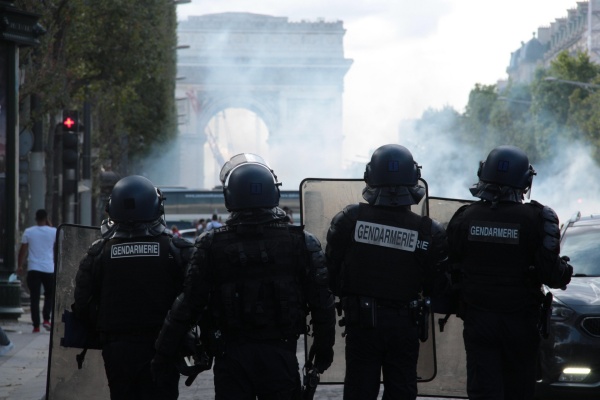
[Image of Gendarmerie, Credit to Pixabay]
France entered its third consecutive weekend of mass protests on October 31, preparing for what the interior minister has called a “very high risk of public disorder,” as the youth-led movement over the cost of living and public services expanded into Germany, Italy, Belgium, and Spain.
The French government has deployed 70,000 police and gendarmes nationwide for the day, forcing the Paris march to the edge of the capital and closing more than 40 metro stations, in what officials have described as the largest internal security operation of the current unrest.
Interior Minister Laurent Nuñez had previously announced earlier in the week that demonstrations would be authorized only outside town centers and that face-covering masks would be prohibited, even for participants dressed in Halloween costumes.
Specialized units, including SWAT teams, helicopters, armored vehicles, police dogs, and water cannons, have been placed on standby, after earlier weekends saw rioting and looting in several French cities.
The French protests began in late September, initially led by high school students demanding action on deteriorating school buildings, teacher shortages, and changes to the university admissions system, before broadening into a wider movement over the cost of living and social security.
The current wave of unrest was triggered after Prime Minister Emmanuel Macron opened budget negotiations for the 2027 fiscal year, and has drawn the participation of the Yellow Vests movement, which has described the October 31 demonstrations as the “third act” of the current cycle, following earlier protests on October 17 and October 24.
In Germany, where organizers of a new youth-led campaign known as “GenZ Regelt,” or “Gen Z Takes Charge,” said more than 160,000 people had registered online, protests are planned for about 34 cities including Berlin, Frankfurt, Cologne, and Munich.
German demonstrators have cited the high cost of living, underfunded schools and universities, environmental policy, and a proposal to reintroduce mandatory military service as their core grievances, with organizers urging participants to keep their faces visible to signal peaceful intent.
Berlin police estimated that approximately 10,000 people would gather at the Brandenburg Gate alone, prompting the deployment of additional officers across the country in anticipation of possible disorder.
Italy saw the first major mobilization of the weekend on October 30, when roughly 100,000 students, workers, and other demonstrators turned out across approximately 50 cities including Rome, Milan, Naples, and Turin.
In Rome, protesters set objects on fire and waved flags in a square filled with red smoke, prompting Italian authorities to tighten security measures in preparation for additional demonstrations through the weekend.
Smaller rallies have also been reported in Belgium and Spain, which organizers and analysts have framed as part of a broader, continent-wide wave of Gen Z-led unrest that began in France and has spread across the European Union.
Businesses in several European capitals have taken defensive measures in anticipation of the demonstrations, with luxury boutiques and clothing stores in Paris, Berlin, and other cities boarding up windows with wooden panels to guard against looting and property damage.
The United States Embassy in France issued an advisory urging American travelers to avoid areas where demonstrations or large gatherings are planned, citing the risk of violence and transit disruptions.
The current wave of protests in Europe follows the “Bloquons tout” movement that convulsed France in September and October 2025 in opposition to the Bayrou government’s proposed 2026 austerity budget, as well as a broader cycle of Gen Z-led protests that swept through Indonesia, the Philippines, Nepal, and Madagascar last year.
Analysts and government officials have warned that the coincidence of the protests with Halloween festivities, combined with separate calls for gatherings across France after 8 p.m. local time, could further complicate the task of distinguishing demonstrators from revelers and escalate the risk of disorder.

- Alice Hong / Grade 11
- The Madeira School