
![THE HERALD STUDENT REPORTERS [US]](/assets/images/logo_student_us.png)
![THE HERALD STUDENT REPORTERS [Canada]](/assets/images/logo_student_ca.png)

The Atlantic currents are weakening and nearing collapse
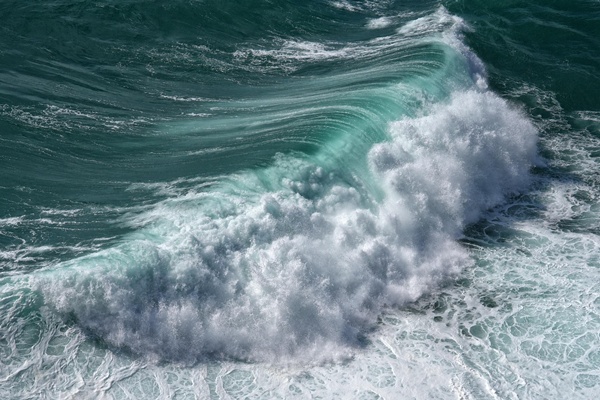
[Ocean current. Photo Credit to Pixabay]
On April 15, 2026, Valentin Portmann and co-researchers reported that the Atlantic Ocean’s current is weakening at an alarming rate, raising urgent concerns about its global consequences.
The Atlantic Meridional Overturning Circulation (AMOC) acts as a massive conveyor belt that moves warm and cold water across the ocean and helps regulate Earth’s climate.
However, recent studies have shown that it is weakening as human-caused global warming disrupts the ocean’s balance of heat and salinity, the concentration of dissolved salts, with some research also suggesting a possible collapse as early as the next decade.
What makes this situation particularly urgent is that these changes could directly impact our daily lives, such as altering where we could grow food and affecting coastal cities to remain habitable during our lifetime.
Scientists analyzing real-world data from four anchors along the western boundary of the North Atlantic Ocean indicated that the AMOC has been weakening at all four different latitudes over the past two decades.
The decline’s occurrence at four different locations is particularly important, as the western boundary regions act as an early warning for the entire AMOC system globally.
The last AMOC collapse occurred approximately 12,000 years ago during the last ice age, when it reshaped global weather patterns, significantly affecting billions of people worldwide and more dramatically those who live in certain regions.
The collapse of the AMOC would drive Europe into an extremely harsh and longer winter with colder temperatures, raise sea levels by 50 to 100 centimeters along the U.S. East Coast, and cause severe droughts across Africa, where millions of people depend on rainfall for survival.
This 50-centimeter sea level increase may seem like a small number; however, this means regular flooding in major cities in the world, like Miami, during normal seasons, eventually causing heavy damage and migration among the populations.
In the most recent study published on Thursday in Science Advances, scientists combined advanced climate models with real-world ocean data to map out the AMOC’s future over the coming decades.
They found that most climate models significantly underestimate the decline of the AMOC; the AMOC is on course to slow by more than 50 percent by the century’s end, and a weakening of 60 percent stronger than the average models predict.
Looking at the whole picture, this indicates that food prices may rise as droughts in Africa deplete global food supplies and agricultural patterns collapse under an unstable climate.
Furthermore, the fishing industry would also fall since the ocean ecosystem is highly dependent on the AMOC, which can reduce the protein source for coastal communities.
Many researchers have stated that it is an irreversible situation because the tipping point has already been passed, emphasizing its severity.
This is caused as Greenland’s ice melts, freshwater is poured into the North Atlantic disarranging the density, and therefore salty water that fuels the AMOC disrupts the system balance.
This issue demands immediate action to reduce greenhouse gas emissions and a development for a more sustainable energy source before the permanent collapse of AMOC happens.
The AMOC collapse will directly determine how our future generations and societies will call a place home.

- Sogyu Kim / Grade 10
- Korea International School