
![THE HERALD STUDENT REPORTERS [US]](/assets/images/logo_student_us.png)
![THE HERALD STUDENT REPORTERS [Canada]](/assets/images/logo_student_ca.png)

Public health experts warn that digital consumption and AI companions are driving youth isolation
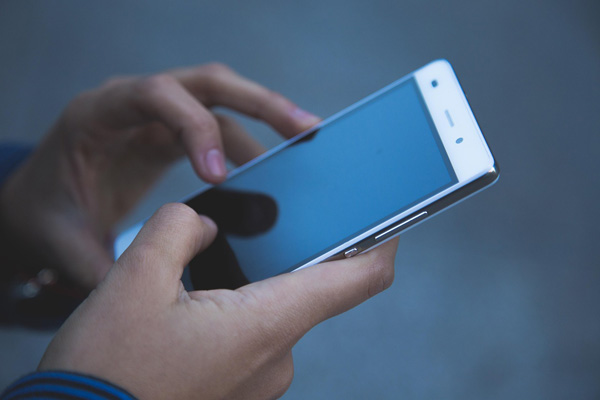
[Image of Phone and hand, Credit to Pixabay]
Public health experts at a Johns Hopkins University media briefing on February 26, 2026, warned that rising youth loneliness is directly linked to social media and artificial intelligence chatbots.
Health officials now compare the physical risks of isolation to a daily smoking habit.
The briefing explored how digital platforms are affecting teenage mental health.
Experts identified clear connections among constant screen time, shortened attention spans, and a sense of being cut off from society.
Common Sense Media published related data in January 2025, which revealed that almost 75 percent of teenagers interact with AI companions.
Roughly a third of those users choose bots over actual people for deep emotional conversations.
Students cited social anxiety and fear of peer judgment as reasons for this preference.
The World Health Organization (WHO) has begun monitoring this global trend.
A June 2025 report from the WHO Commission on Social Connection revealed that one in six people worldwide experiences loneliness.
Teenagers currently report the highest rates of isolation across all demographic groups.
The WHO estimates this loneliness crisis is linked to over 871,000 deaths a year, which is about 100 deaths per hour globally.
In the past, the internet was a place for conversation. Now, it is mostly for passive consumption.
The real-world consequences are severe.
According to the WHO, lonely teenagers are 22% more likely to see their grades drop, and they are twice as likely to develop clinical depression.
To address these concerning trends, U.S Surgeon General Dr. Vivek Murthy advocates for immediate tech-free zones in both schools and homes.
He emphasized that the physical risk of chronic social disconnection is comparable to heavy daily smoking.
Experts link this cycle of “connected loneliness” directly to human biology.
Dr. Anna Lembke, a psychiatrist at Stanford and author of Dopamine Nation, says smartphones and app algorithms trigger a rapid release, a chemical linked to craving a reward, but do not trigger oxytocin, the bonding chemical.
“We are looking for social connection,” Dr. Lembke stated in her research on digital addiction, “but what we are getting is a dopamine hit that leaves us in a dopamine-deficit state.”
While dopamine, a neurotransmitter linked to reward and motivation, drives the compulsive, endless loop of scrolling, researchers note that it is oxytocin, a hormone released through sustained eye contact, shared physical presence, and deep, empathetic conversation, that builds long-term trust and emotional resilience.
This biological mismatch results in what some experts call “social snacking,” where students engage in brief, superficial interactions that fail to fully satisfy the human physiological need for genuine connection.
As direct offline social interaction becomes increasingly anxiety-inducing for Generation Z and Generation Alpha, a booming multibillion-dollar industry of AI companions is filling this void.
Bots on platforms such as Character.AI offer what sociologists refer to as “frictionless friendship.”
The AI provides highly programmed dynamics where the bot always listens, never argues, and provides constant, unearned validation.
Health officials now stress the need for physical solutions to this issue.
The WHO recommends that governments and communities increase funding for community centers, parks, and libraries to make these spaces accessible for face-to-face interactions.
Their latest framework calls for early mental health interventions in schools and increased mental health support services for struggling youth, aiming to prevent loneliness before it escalates.
Genuine human relationships require compromise. They involve arguments, awkward silence, and the ability to navigate difficult conversations.
However, the digital platforms where younger generations spend most of their time removes these necessary challenges.
Researchers argue that this leaves young adults unequipped for the realities of life.
Teenagers require unpredictable situations because the only way for them to actually develop healthy social skills is to build connections with real people, filled with friction, and form lasting bonds.

- Alice Hong / Grade 10
- The Madeira School