
![THE HERALD STUDENT REPORTERS [US]](/assets/images/logo_student_us.png)
![THE HERALD STUDENT REPORTERS [Canada]](/assets/images/logo_student_ca.png)

U.S., Israel launch strikes on Iran, triggering 2026 Iran war
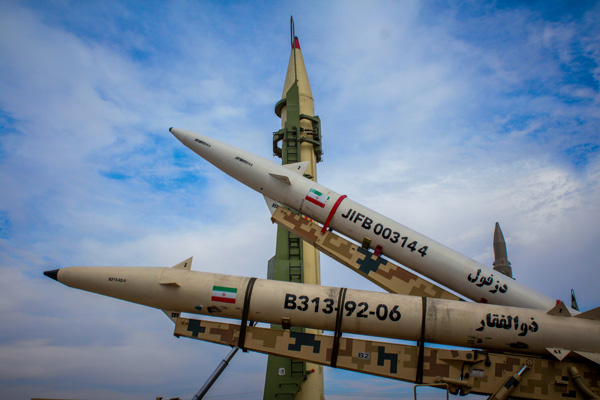
[A group of fighter jets sitting on top of each other, Photo credit: UnSplash]
On February 28, 2026, a major escalation unfolded in the Middle East as the United States and Israel launched coordinated airstrikes on Iran, dropping bombs in the middle of the country's capital, Tehran.
According to BBC news, Israel deployed nearly 200 fighter jets and dropped more than 1,200 bombs within the first 24 hours, while U.S. forces struck dozens of additional sites using aircraft and naval assets stationed across the Middle East.
The coordinated strikes marked the beginning of a much larger regional—possibly even global—conflict, now known as the 2026 Iran war.
The United States was well aware of the potential implications of such an action.
This then raises questions about the underlying motivations behind the attack.
While news outlets and political officials often cite nuclear weapons as the primary cause, a myriad of different causes and interests are intertwined - not only in nuclear matters, but in politics, the economy, and international relations.
To fully grasp the complexities of this conflict, it is essential to consider the broader geopolitical context of the Middle East.
The Middle East holds a significant share of the world’s oil reserves.
According to OPEC, in 2023, more than half, or 55.71 percent, of global crude oil reserves totaling 1.57 trillion barrels were located there.
The United States therefore needed a reliable partner to maintain its influence in this strategically vital region; that partner was Israel.
According to a Rasmussen Reports survey reported by the World Jewish Congress, ~70 percent of Americans regard Israel as the US's friend and closest ally in the Middle East.
Historically, the United States has been supporting Israel for a long time.
By contrast, Iran decisively broke ties with the United States after the 1979 Islamic Revolution.
Since then, Iran has positioned itself as a clear adversary of Washington and has been one of the most outspoken opponents of Israel’s existence and regional role.
This long-standing hostility has made Iran a central focus of U.S. security concerns in the Middle East.
Tensions escalated further in February 2026, when the International Atomic Energy Agency (IAEA) issued a report expressing “utmost urgency” about Iran’s nuclear program.
The agency highlighted Iran’s stockpile of roughly 440 kilograms of uranium enriched up to 60 percent; a material that, if further enriched, could be sufficient for multiple nuclear weapons within a relatively short time frame.
From the perspective of the United States, this meant that the biggest enemy of its closest ally, Israel, was moving much closer to a potential nuclear weapons capability.
In this context, Washington could justify military action against Iran as both a defensive move to protect Israel and a preventive step to halt nuclear proliferation in a region that already controls the majority of the world’s oil reserves.
In other words, a justification cited by U.S. officials for attacking Iran.
The economic situation within Iran was another contributing cause.
In recent years, Iran's economy has deteriorated severely, largely due to U.S. economic sanctions related to its nuclear program and regional activities.
According to IMF projections, in 2026 the Iranian rial plummeted to unprecedented lows, trading at over 1.45 million rials per U.S. dollar on the open market by late 2025, while inflation soared above 40 percent.
This economic crisis triggered large-scale protests starting December 28, 2025, which quickly spread to over 100 cities across 17 of Iran's 31 provinces—described as the largest uprising since the 1979 Islamic Revolution.
According to eyewitness accounts, initially focused on economic failure, the demonstrations evolved into direct challenges to the regime itself, with chants of "Death to the dictator" targeting Supreme Leader Ayatollah Ali Khamenei; the crackdown has reportedly killed over 500 protesters, with arrests exceeding 10,000.
From Washington’s perspective, this internal chaos presented a strategic opportunity.
A weakened government may be more vulnerable to external pressure, allowing the U.S. to justify intervention under the doctrine of the "Responsibility to Protect" (R2P).”
By framing the attack as support for the Iranian people against their oppressive government amid economic collapse and mass protests, the U.S. could portray the action as both morally legitimate and strategically timed to capitalize on Tehran's fragility.
Another underlying factor was Trump’s domestic political situation.
Just days before the attack, the U.S. Supreme Court ruled against one of Trump’s flagship economic initiatives—his unilateral tariff policy—declaring that it had exceeded presidential authority.
This ruling significantly undermined one of the administration’s key achievements in economic nationalism and foreign trade pressure.
Additionally, Trump’s political position was weakening due to various controversies, including the release of the Epstein files and continuing legal probes into campaign finance violations.
According to Gallup polls, Trump’s approval rating dropped from around 46% in January to 38% by early March 2026, marking one of the steepest declines since 2018.
With the November 2026 midterms only eight months away, Trump had limited time to regain political momentum before voters headed to the polls.
Amid such domestic instability, a sudden external conflict can, intentionally or not, divert national and media attention from internal political struggles.
In political science, this is often referred to as the “Wag the Dog” phenomenon.
Historically, similar patterns have been observed during the Clinton administration’s 1998 airstrikes on Iraq, which coincided with the Lewinsky scandal.
Finally, some analysts also point to possible economic incentives that could benefit the Trump’s administration economically.
When tensions rise in the Middle East, regional powers such as Saudi Arabia, the UAE, and Iran often increase their military spending.
According to the Stockholm International Peace Research Institute (SIPRI), Middle Eastern nations accounted for approximately 30% of global arms imports in 2025, with the United States supplying over 45% of those exports.
These purchases not only fuel American revenue but also sustain employment in the U.S. defense and manufacturing sectors, key constituencies that supported Trump in states like Texas, Alabama, and Michigan.
The conflict could also have direct implications for South Korea and the broader international community.
Korea’s economy is heavily dependent on imported energy, with more than 70% of crude oil sourced from the Middle East.
A substantial portion of this oil transits through the Strait of Hormuz, a narrow waterway bordered by Iran and Oman that connects the Persian Gulf to the Gulf of Oman and the Arabian Sea.
According to the U.S. Energy Information Administration (EIA), roughly 20% of the world’s total oil supply, around 21 million barrels per day, flows through the Strait of Hormuz, making it the most critical energy chokepoint on the planet.
Should tensions in the Strait escalate or block tanker passage, international oil prices could surge beyond $120 per barrel, triggering a global ripple effect.
Gasoline prices at local stations would rise, increasing transportation and logistics costs, which would eventually drive up consumer goods prices.
Global investors would likely turn to the U.S. dollar and Treasury markets as safe havens, potentially increasing capital flows into U.S. financial markets.
In conclusion, the 2026 Iran war is not merely an attack, but a complex puzzle of overlapping causes and interests.
The nuclear issue, the failure of negotiations, the instability within Iran, the domestic politics of the United States, and the economic interests all intersected at one point, and that was the Iran war.
War rarely occurs entirely by accident; everything is calculated.
However, the role of political leadership cannot be overlooked
If the conflict was influenced, even in part, by domestic political pressures or attempts to divert public attention, it raises serious questions about the responsibilities of democratic leaders.
Offensive realist based decisions that can destabilize entire regions and communities should not be used as tools for political incentive.

- Jeongmin Kim / Grade 11
- Chadwick International School