
![THE HERALD STUDENT REPORTERS [US]](/assets/images/logo_student_us.png)
![THE HERALD STUDENT REPORTERS [Canada]](/assets/images/logo_student_ca.png)

Nationwide protests in the U.S. draw attention to immigration enforcement policies
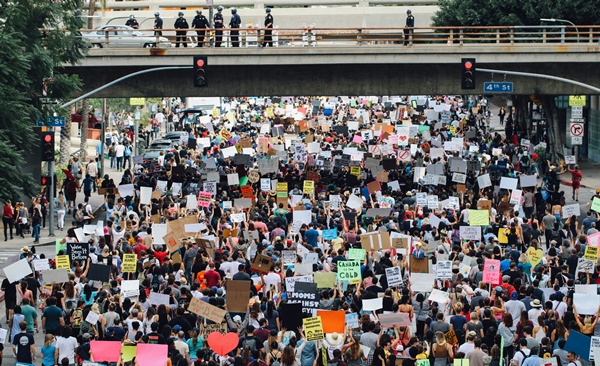
[Photo of protests. Photo credit to unsplash.com]
Large-scale protests swept across the United States in late January and early February 2026, as people demonstrated against federal immigration enforcement policies and actions carried out by U.S. Immigration and Customs Enforcement (ICE).
The demonstrations quickly garnered national attention and emerged as one of the most visible protest movements in the country at the start of the year.
The protests were sparked by recent incidents during immigration enforcement operations, including the deaths of civilians, which caused a strong public reaction.
These incidents sparked concerns about the use of force, accountability, and how immigration laws are enforced. As details emerged, public anger and concern escalated rapidly.
In response, thousands of protesters gathered in major citiies such as Minneapolis, Washington, D.C., San Francisco, New York, and Los Angeles.
Demonstrations were held in downtown areas, near government buildings, and outside federal offices, drawing attention from national media outlets.
In Minneapolis, where some of the earliest protests started, crowds filled downtown streets calling for accountability and policy reform.
Protesters held signs, shouted chants, and demanded reforms to what they described as overly harsh enforcement methods.
Many participants emphasized the need for better oversight of federal immigration agencies.
Similar demonstrations took place in other cities, with marches held near courthouses and federal buildings.
In Washington, D.C., several faith leaders were arrested during a peaceful protest outside federal property, bringing increased public attention to the issue and sparking further discussion nationwide.
The protesters encompassed immigrant rights groups, students, labor unions, and religious leaders.
Many demonstrators argued that immigration enforcement should prioritize human rights while still following the law.
Some demonstrations also involved school walkouts, temporary business closures, and strike actions as part of organized nationwide efforts.
Federal officials responded by asserting that immigration enforcement actions adhere to existing laws and stressed the government’s responsibility to enforce immigration policy.
Authorities clarified that ICE operates under legal guidelines set by Congress and the administration.
Investigations into the recent incidents are ongoing, and officials have asked the public to remain calm while legal reviews continue.
The protests garnered extensive media attention and spread quickly on social media, where photos and videos of marches, crowds, and arrests were shared.
Supporters of the protests argued that current policies lack sufficient oversight and called for reform. Critics, however, raised concerns about public disruption and the challenges faced by law enforcement agencies.
The demonstrations reveal deep divisions within American society over immigration, civil rights, and government authority.
Immigration has long been a contentious issue in the United States, and recent events have brought the debate back to the forefront.
Experts suggest the protests reflect a broader global trend, as many countries grapple with migration, border control, and humanitarian responsibilities amid political and economic uncertainty.
Rising global migration has placed increasing pressure on governments to balance security and human rights.
Although most demonstrations remained peaceful, authorities increased security measures in several cities to maintain public safety and prevent violence.
Officials also encouraged dialogue between communities and policymakers as a way to address growing concerns.
As demonstrations continue into February, the situation remains changeable, with additional demonstrations planned in multiple regions.
The outcome of these movements may influence future discussions and decisions regarding immigration policy and enforcement in the United States.
In summary, the nationwide protests highlight rising tension over immigration enforcement and demonstrate the power of public action in shaping national debate.

- Matthew Hong / Grade 10
- CSIS Intercultural School