
![THE HERALD STUDENT REPORTERS [US]](/assets/images/logo_student_us.png)
![THE HERALD STUDENT REPORTERS [Canada]](/assets/images/logo_student_ca.png)

The United Kingdom lowers voting age to 16 in major democratic reform
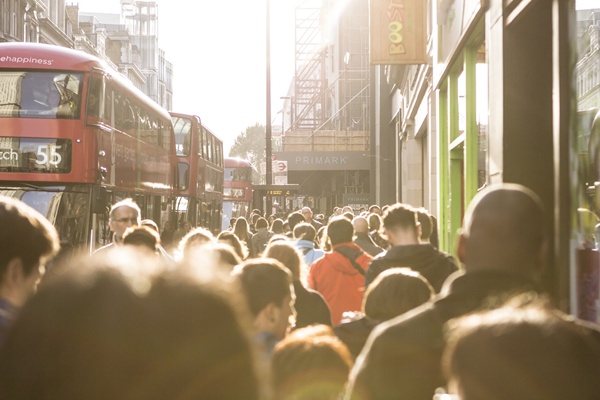
[A bustling city in the United Kingdom. Photo Credit to Pxhere]
On July 16, 2025, the United Kingdom announced a landmark democratic reform to lower the voting age from 18 to 16 for all national elections.
If this reform is passed, citizens aged 16–17 will be allowed to vote in all UK general elections for the first time, potentially reshaping the country’s political landscape.
The Labour government first introduced this proposal as part of a broader package of democratic and electoral reforms the UK was seeking to implement.
Government officials have recognized that 16 and 17 year olds are more than capable of taking on the role of adult tasks such as voting as they have already proven themselves by working and paying taxes and extending voting rights reflects this responsibility.
The government has stated that their primary objective is to modernise democracy within the UK and promote public participation in elections.
Thus, if all reforms were to be passed, they would all apply during the next general election in 2029, adding approximately 1.5 million new voters to the UK electorate.
The new voting reform would apply across all countries within the United Kingdom: England, Scotland, Wales, and Northern Ireland.
In fact, according to The Guardian, Scotland and Wales already allow 16- and 17-year-olds to vote in devolved and local elections.
This existing policy has demonstrated possible benefits and impacts the UK will experience once this reform is passed.
For example, studies conducted in Scotland found that young people who were eligible to vote at 16 or 17 showed higher turnout even years later compared to peers who started voting at the age of 18, suggesting that voting at an earlier age can promote long term participation.
Sustained participation in voting provides positive outcomes for the UK as it makes governments more representative and strengthens democratic stability.
In fact, the UK will be joining a small group of countries that allow voting from age 16 in national elections, such as Austria and Brazil.
However, this reform has sparked political debate within the UK.
Critics have questioned the level of political understanding and maturity of these young teenagers.
Supporters have countered this claim by stating that countries with lower voting ages often experience stronger participation from young voters than older new voters, disproving the belief that teenagers are less motivated or informed politically.
Additionally, Daniel Hart and James Youniss, professors of psychology at Rutgers University and Catholic University of America in Washington, D.C., argue that this reform will promote civic responsibility and enhance civic education.
Despite these claims, public opinion poll reports show that most adults remain against lowering the voting age.
Shortly after the voting reform announcement, the government has also proposed reforms to voter identification rules.
Meaning, before casting a ballot, all participants must present a specific identification to ensure more accessible voting while maintaining election security.
Both reforms must pass through Parliament before it can become law, where lawmakers from different parties are expected to closely assess the impact of lowering the voting age and consider sides of both critics and supporters.
If the legislation fails to pass by 2029, the current voting age of 18 will remain in effect across all UK general elections.
If enacted, the bill would represent the most significant change in voting rights in the UK since the voting age was lowered from 21 to 18 in 1969.

- Kylie Park / Grade 10
- Korea International School