


Michigan Senate candidates clash in two debates ahead of November 3 election
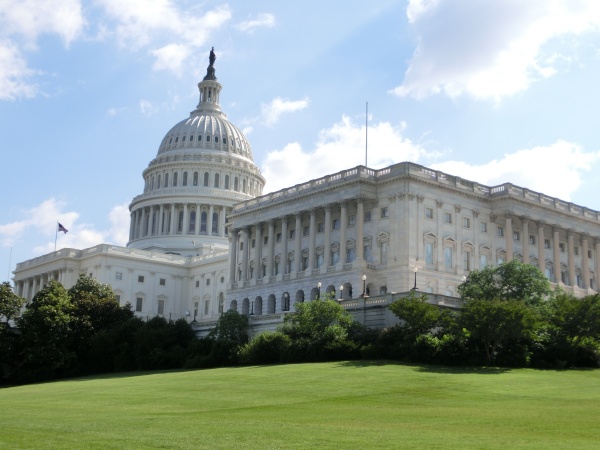
[Senate. Photo Credit to Pixabay]
Democrat Abdul El-Sayed and Republican Mike Rogers faced off in two televised debates this month in their race for Michigan Senate, a contest that could help determine control of the chamber.
Michigan is considered a key Senate battleground in 2026 as one of two Democratic-held Senate seats in a state carried by Donald Trump in the 2024 presidential election.
The general election is scheduled for November 3rd, with candidates competing for the open seat following the retirement of Democratic Senator Gary Peters.
El-Sayed is a former Wayne County public health official, while Rogers is a former congressman and the Republican nominee in the 2024 Michigan Senate race, when he narrowly lost to Democrat Elissa Slotkin.
The first debate, held in Grand Rapids and reported on WOOD-TV in October, covered topics such as the economy, healthcare, immigration, technology, and questions from Michigan voters.
During the debate, Rogers claimed President Trump’s tariffs had benefited the Michigan economy and accused El-Sayed of being unable to look past political rhetoric on this issue.
In his response to a healthcare question, Rogers described El-Sayed as a “glitchy AI chatbot.”
On the flip side, El-Sayed criticized Rogers for his unfiltered support for President Trump and said that his opponent would function as a rubber stamp for the president’s priorities.
The second debate took place at WXYZ-TV in Southfield on October 21, less than two weeks before Election Day.
In his opening statement, Rogers emphasized the decline of manufacturing jobs in Michigan, high utility rates, and high insurance costs for automobile vehicles, and criticized El-Sayed for wanting to raise taxes.
In response, El-Sayed argued he would work to lower the cost of living and accused Rogers of standing “hip to hip” with Trump on policy.
When the debate turned to immigration, Rogers defended Immigration and Customs Enforcement, stating that the agency’s efforts to pursue violent criminals had a significant effect on crime.
In contrast, El-Sayed criticized the agency for its tactics, pointing out that agents aren’t required to identify themselves or explain their presence.
The candidates also expressed their disagreements regarding healthcare.
Rogers argued El-Sayed’s proposal of Medicare for All was too expensive to get support from the Democratic Party, El-Sayed accused Rogers of being too closely aligned with the pharmaceutical industry.
Regarding the Iran war, Rogers warned Iranian nuclear weapon developments could drive gasoline prices even higher, whereas El-Sayed pointed out how Rogers had advocated for war repeatedly over many years.
When the Safeguard American Voter Eligibility Act was brought up, the candidates once again split up.
El-Sayed opposed the bill, describing it as voter suppression.
Conversely, Rogers supported this act and called the requirement “reasonable and rational.”
The most heated exchange occurred when Rogers questioned El-Sayed’s loyalty to the United States and alleged ties to the Muslim Brotherhood.
As a Muslim born in Michigan, El-Sayed denied the accusation, telling Rogers it was “quite beneath you.”
Rogers had made a related claim in the first debate, asserting El-Sayed had accepted campaign money from individuals who support designated terrorist organizations.
Rogers also accused El-Sayed of wanting to defund law enforcement, an allegation El-Sayed vehemently denies.
Polling conducted after the second debate showed El-Sayed leading. A Glengariff Group survey of 600 likely voters conducted October 19 to 22 for WDIV and The Detroit News placed El-Sayed at 51.4% and Rogers at 45.1%, with 3.6% undecided.
Another Mitchell Research poll released October 28 showed El-Sayed at 51% and Rogers at 44% among likely voters.
Republicans haven't won a Senate race in Michigan since 1994, though the state was carried by Trump in the 2024 presidential election.

- Minsung Choi / Grade 12
- Shekou International School