
![THE HERALD STUDENT REPORTERS [US]](/assets/images/logo_student_us.png)
![THE HERALD STUDENT REPORTERS [Canada]](/assets/images/logo_student_ca.png)

Hyundai unveils Atlas humanoid robot
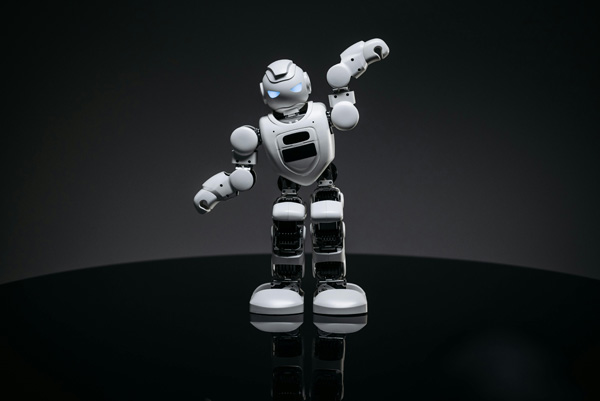
[White Robot. Photo Credit to Pexels]
Hyundai Motor Group, in partnership with its robotics subsidiary Boston Dynamics, unveiled the Atlas humanoid robot during the Consumer Electronics Show 2026, in Las Vegas.
The reveal marks a transition in the robotics industry, showcasing a robot designed to work alongside humans in real-world factory environments.
During the exhibition at CES, Atlas demonstrated human-scale movements, including walking, lifting, manipulating objects, and adapting to its surroundings.
Unlike conventional factory robots, which are fixed and programmed for a single repetitive task, Atlas can navigate complex environments, recognize objects, and adapt to new tasks with minimal retraining.
It stands 6.2 feet tall and weighs about 198 pounds.
It is built to perform physically demanding tasks that would strain human workers.
Atlas can even swap its own batteries on its own, extending its operational time without needing humans to stop and recharge it.
Boston Dynamics says it takes just one day to set up this version of Atlas, and it “learns new tasks quickly, adapts to dynamic environments,” and requires minimal human supervision to carry out its set tasks.
Hyundai plans to initially deploy Atlas in manufacturing facilities, starting with tasks such as parts sequencing, and eventually expanding to assembly, heavy lifting, and other repetitive operations.
Hyundai announced that Atlas will begin operating in factories starting from 2028, with the goal of deploying up to 30,000 robots annually across its production network.
During the unveiling, Hyundai said that Atlas is made to support human employees, not replace them, taking on dangerous tasks.
This approach aligns with Hyundai’s broader AI strategy, which pairs artificial intelligence with machines that interact with the world.
The robot’s unveiling has already garnered significant attention from the industry.
Atlas earned the Best Robot distinction from CNET during the show’s Best of CES 2026 awards, reflecting recognition of its advanced mobility and adaptability.
Experts say the Atlas can shape how factories use robots, demonstrating that machines can collaborate with humans.
However, the introduction of humanoid robots in manufacturing also raises concerns about the future.
Experts and industry leaders say companies need rules, training, and careful planning when adding robots to factories.
Hyundai asserts that Atlas is designed to assist people, not replace them, and that workers will still have their job while staying safer and more efficient.
The CES 2026 showcase also featured Hyundai’s broader robot industry, highlighting the company’s expanding investment in industrial AI and automation technologies.
Atlas combines mobility, adaptability, and AI-based learning, fostering collaboration between human workers and intelligent machines.
Hyundai sets a clear example of how robots and people can share the workplace, providing a vision for efficient factories, leading to a new era in automation.

- Jason Lee (Jaewon Lee) / Grade 11 Session 5
- Saint Andre Bessette Catholic secondary school