


NASA-funded researchers assess oyster losses after algae bloom in Virginia
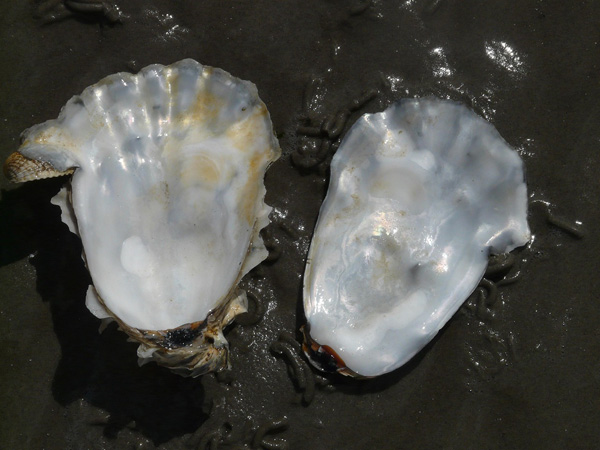
[Oyster shells on a beach. Illustrative photo. Photo Credit: Pixabay]
NASA-funded researchers are collaborating with Virginia officials to assess the damage to oyster farms after a harmful algae bloom spread along the Chesapeake Bay’s Eastern Shore in September 2026.
In an October 29 update, NASA reported that researchers were using satellite images and computer models to pinpoint the areas affected by the bloom and understand the conditions surrounding it.
The bloom coincided with reports of dead fish and oyster losses, raising concerns among shellfish growers and scientists about the effects on the region’s coastal waters.
NASA reported that researchers from the Virginia Institute of Marine Science (VIMS) documented an almost continuous bloom extending approximately 15 miles along Virginia’s Eastern Shore, from Cape Charles to south of Nassawadox Creek.
The bloom included Alexandrium monilatum, a microscopic algae species known to harm fish, shellfish, and other marine life.
A harmful algal bloom occurs when algae multiply rapidly and reach concentrations that can disrupt aquatic ecosystems or affect people and animals.
Scientists observed discolored water in areas along the Eastern Shore, including several creeks that oyster growers used.
The Virginia Department of Health advised people and pets to avoid contact with the bloom water, noting that the dense algae may cause skin irritation.
The department futher explained that the algae can produce substances harmful to fish and that blooms may also contribute to fish deaths when oxygen levels in the water decline.
Although Alexandrium monilatum is known to produce toxins that can harm marine life, researchers at William & Mary’s Virginia Institute of Marine Science (VIMS) are still investigating whether the species directly caused the reported oyster deaths or whether other environmental factors contributed to the losses.
For oyster farmers, the losses have raised concerns about both their current harvest and future production.
The Chesapeake Bay Foundation reported that oyster grower Alex Lambert estimated that he lost nearly $400,000 worth of oysters following the bloom.
His estimate describes one farm’s reported losses rather than the total economic damage across the region.
In late September, two members of Congress urged the U.S. Department of Agriculture to assess the losses and determine whether affected growers could qualify for disaster assistance.
Their request noted that losses included oysters at different growth stages, including young oysters that would have supported future harvests.
To pinpoint the location of the bloom, researchers examined images from the European Space Agency’s Copernicus Sentinel-2 satellites to map areas with elevated concentrations of microscopic algae.
They also employed a Chesapeake Bay forecasting system to reconstruct water temperature, salinity, and wind conditions before and during the event.
The analysis indicated that water temperatures during much of early September were higher than the range observed during the same period from 2018 to 2025, potentially placing additional stress on oysters.
Researchers at VIMS also found that calm winds may have initially allowed algae to remain in place, while stronger winds later may have pushed bloom waters toward oyster-growing areas.
These observations, while shedding light on the conditions that accompanied the bloom, do not by themselves establish a single cause for the oyster losses.
The Virginia Marine Resources Commission is utilizing the team’s maps and guidance to locate affected oyster farms and restoration sites and assess the damage to farms.
The project builds on a NASA-funded project that integrates satellite observations with information from shellfish growers to improve water-quality forecasting.
By studying the September bloom and its effects, scientists and coastal managers hope to deepen their understanding of such events and help growers prepare for future risks.

- Jinhyun Choi / Grade 11
- Saipan International School