


Rwanda’s new legislation targets antibiotic risks before they reach the plate
[Photo Credit: Pexels]
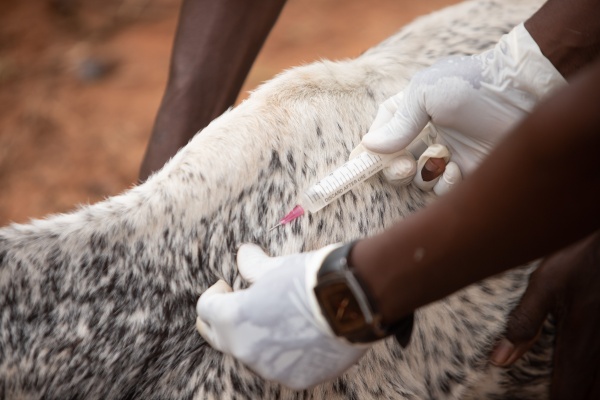
Rwanda has strengthened oversight of livestock treatment and veterinary medicines through legislation published September 11, aiming to reduce risks from unsafe animal products and antimicrobial resistance at its source.
The reforms address longstanding gaps in food safety by mandating that farmers, veterinarians, and authorities apply One Health, an approach connecting human, animal, and environmental health, throughout the livestock production system.
The reform also addresses underlooked issues in veterinary care.
According to Jean Claude Ndorimana, Director General of Animal Resources Development at the Agriculture and Animal Resources ministry, the previous framework allowed livestock owners to treat animals without adequate expertise.
Improper treatment, he warned, can encourage resistance and expose consumers to antibiotic residues in meat and milk.
Research on antibiotic use and resistance in Rwanda underscores the urgent need for such federal guidelines.
A nationwide survey published in 2017 involving 229 farmers found that 97.4 percent reported using antibiotics in their animals, while 55.6 percent reported using them without prescriptions.
Some also used antibiotics for disease prevention or growth promotion, underscoring how these medicines served purposes beyond treating diagnosed infections.
The responsibility does not lie with farmers alone.
A study published in 2024 surveyed 256 animal-health professionals across five Rwandan districts; 68 percent reported at least one instance of inappropriate antibiotic use during the preceding year.
Non-prescribed use is not a problem unique to Rwanda: a review in the Rwanda Public Health Bulletin identifies it as a persistent international issue in agriculture.
The consequences of resistance built from antibiotic misuse are becoming increasingly evident in hospitals.
A study published in 2026 examined 1,352 bacterial isolates from blood cultures collected at the University Teaching Hospital of Kigali between 2020 and 2024.
Among Gram-positive isolates, a group with an outer membrane that can hinder some antibiotics, resistance to gentamicin reached 69.5 percent.
Resistance to penicillin, a Gram-positive bacteria, reached 91.7 percent.
Although these findings are not national prevalence estimates, as nearly 99 percent of isolates came from hospitalized patients at one referral institution, they reinforce earlier Rwandan research documenting resistance to widely prescribed medicines.
Together, these studies underscore the need for coordinated action across human health care, animal care, and environmental protection to preserve antibiotic effectiveness.
One Health, a framework promoted by the WHO and its international partners, provides a philosophy for such an integrated response.
By connecting veterinary care, food safety, and human health as one interconnected system, the approach helps identify and address risks of resistant bacteria and resistance genes circulating through the food supply chain that may be missed when individual sectors work in isolation.
Rwanda’s law seeks to prevent animal-health problems from escalating into wider public-health threats through measures including disease-reporting, vaccination, and isolation and quarantine provisions.
Implementation will determine whether these ambitions translate into protection.
The agriculture ministry is preparing technical orders covering veterinary medicines, disease control, inspection, and animal-product movement.
Alongside regulation, accessible professional advice is crucial, as research identifies limited veterinary access in Rwanda, particularly in remote areas, as a contributor to inappropriate use.
Public engagement offers a solution to bridge the gap between policy and everyday practice.
Established in 2024, AMR Initiative Rwanda promotes responsible antimicrobial use across human, animal and environmental sectors through education, outreach and research.
Such initiatives aim to educate various communities on the importance of veterinary guidance and how food safety affects their own health, fostering shared responsibility in safe antibiotic use among stakeholders.
The legislation alone cannot reverse resistance by itself.
Nevertheless, it marks a meaningful commitment to prevention, recognizing that protecting people starts well before food reaches the plate or an infection requires treatment.

- Jiwoo Bang / Grade 12
- The Madeira School