
![THE HERALD STUDENT REPORTERS [US]](/assets/images/logo_student_us.png)
![THE HERALD STUDENT REPORTERS [Canada]](/assets/images/logo_student_ca.png)

Measles cases rise again across the United States in 2026
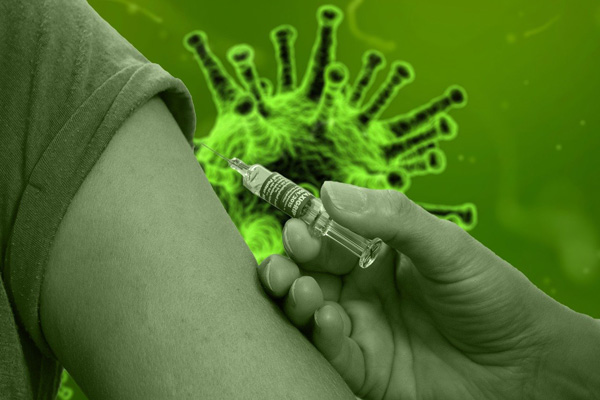
[Vaccination. Photo Credit to Pixabay]
In January 2026, measles cases increased significantly across the United States, with more than 400 confirmed infections reported in at least 14 states so far this year, according to the Centers for Disease Control and Prevention.
Public health officials described this rise as unusual compared to recent years and cautioned that the trend could continue if prevention efforts weaken.
Measles was declared eliminated in the U.S. in 2000, meaning it was no longer spreading continuously within the country.
This achievement was made possible by high vaccination rates and robust public health systems.
The recent surge in confirmed cases highlights the fragility of that success and how quickly progress can be reversed.
Measles is one of the most contagious diseases known to science and spreads through the air when an infected person coughs or breathes.
A person can catch measles just by being in the same room even after the infected person has left.
Roughly nine out of ten unvaccinated people who are exposed will become infected.
This extremely high transmission rate makes measles especially dangerous in communities with low vaccination rates.
Some cases were linked to international travel, while others spread locally after being introduced.
Once the virus infiltrates a community with low immunity, it can spread rapidly through schools, households, and public spaces.
Officials at the Centers for Disease Control and Prevention have warned that if vaccination coverage continues to decline, measles could regain sustained transmission in the United States.
They emphasize that maintaining high vaccination rates is essential to prevent outbreaks and protect public health, as renewed transmission would place added strain on healthcare systems.
This would represent a major public health setback and could place added strain on healthcare systems.
One reason measles is resurfacing is declining trust in vaccines.
Over the past decade, misinformation about vaccine safety has proliferated widely online, including unfounded claims about severe side effects and false links between vaccines and developmental disorders.
Some parents delay or skip routine childhood vaccinations because they fear side effects that are not supported by scientific evidence.
However, studies consistently demonstrate that the measles vaccine is safe and highly effective, with two doses providing strong long term protection.
Another contributing factor is unequal access to healthcare.
Some communities struggle with barriers such as lack of insurance, limited clinics, or language obstacles that make routine care harder to access.
When children miss regular checkups, they are more likely to miss vaccinations.
This increases the chance that measles can spread quickly once introduced.
According to the Centers for Disease Control and Prevention, measles outbreaks are not simply the result of individual vaccination decisions but reflect gaps in community immunity that affect entire populations.
Measles is not a mild illness.
It can lead to high fever, pneumonia, brain swelling, and even death in severe cases.
Even in otherwise healthy people, measles can weaken the immune system for months afterward.
This phenomenon, known as immune amnesia, leaves survivors more vulnerable to other infections.
The global situation also plays a significant role.
Measles cases surged worldwide after disruptions to routine immunization during the COVID-19 pandemic.
As vaccination programs were delayed or interrupted, millions of children missed critical vaccines.
With the rebound of international travel, the risk of importing measles into countries where it was previously controlled increased.
Public health officials continue to stress that measles outbreaks are preventable.
Vaccination protects individuals and creates herd immunity, which safeguards those who cannot be vaccinated for medical reasons.
When vaccination rates fall below a certain threshold, herd immunity weakens, making outbreaks more likely.
The resurgence of measles is not just about one disease.
Instead, it reflects broader issues in public health, including trust in science, access to care, and global cooperation.
The resurgence of measles acts as a warning signal, showing how quickly progress can be lost if prevention efforts are neglected.
It remains a pressing threat that can only be controlled through evidence based public health action and widespread vaccination.

- Esther Kim / Grade 11 Session 11
- Lexington High School