
![THE HERALD STUDENT REPORTERS [US]](/assets/images/logo_student_us.png)
![THE HERALD STUDENT REPORTERS [Canada]](/assets/images/logo_student_ca.png)

Hollywood widens copyright war against AI firms across courts, Congress, and trademarks
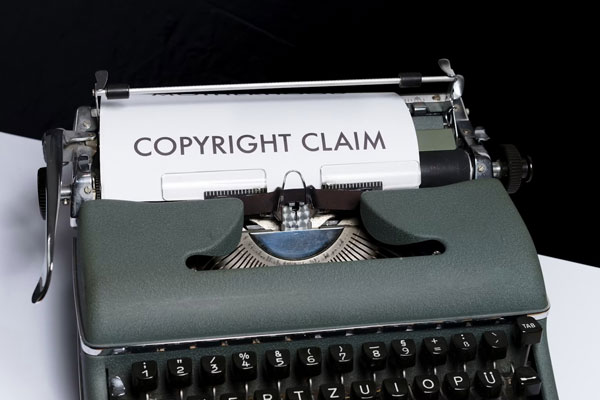
[Typewriter. Photo Credit to Unsplash]
Disney, Warner Bros., and NBCUniversal jointly sued Chinese AI firm MiniMax in September for training Hailuo on Marvel and Star Wars characters, Variety reported, escalating Hollywood's growing copyright battle against generative AI.
Variety reported the joint complaint accuses MiniMax of generating unauthorized images of iconic characters such as Darth Vader, Spider-Man, Wonder Woman, and Shrek that the company marketed as a pocket-sized Hollywood studio.
According to Variety, the studios seek statutory damages of up to $150,000 per infringed work from MiniMax, which holds a roughly $4 billion valuation.
The escalating clash extends far beyond one studio suit, as generative AI trained on protected works challenges the intellectual property framework that Hollywood spent a century building.
The character lawsuits no longer stand alone, with music rights holders pressing parallel claims that stretch the AI dispute beyond the screen.
Lee Mendelson Film Productions, which holds Vince Guaraldi's Peanuts compositions, filed four copyright suits in May targeting GameMill, Heritage Auctions, the Interior Department, and Buckle-Down Inc., Billboard reported.
Billboard added that GameMill allegedly created knockoff music meant to evoke Guaraldi's Peanuts compositions in a 2025 video game, drawing one of the four LMFP suits.
LMFP attorney Marc Jacobson told Billboard that the unauthorized borrowing erodes the artistic integrity of the compositions, casting the suits as a stand against companies that did not want to pay for the rights.
While music publishers protect their work through copyright claims, performers are now advocating for lawmakers to protect their voice and likeness through new federal rights.
Senators Marsha Blackburn and Chris Coons reintroduced a revised NO FAKES Act this year, aiming to establish a US-wide right that lets performers control unauthorized AI replicas of their voice and likeness, Complete Music Update reported.
The trade publication cited a poll revealing that 92 percent of Americans worry about AI deepfakes, positioning the bill as a response to growing public unease around synthetic media.
Spotify, which previously criticized the bill, told Complete Music Update the revised draft improves the platform safe-harbor language, though the streaming company added that further refinement remains necessary.
Collectively, the suits and the bill raise the cost of training models on copyrighted catalogs, which pressures AI firms toward licensing and signals how directly studios now see unlicensed generation as a threat to their core revenue.
Individual stars, not waiting for Congress, have begun building their own legal moats around voice and image.
Taylor Swift filed three trademark applications in 2026, including voice marks for phrases she speaks aloud, after an AI-generated track called Fate of Ophelia surfaced on Spotify Brazil last year, according to the Hollywood Reporter.
Swift followed a similar approach to actor Matthew McConaughey, who secured AI-defense trademarks through the U.S. Patent and Trademark Office earlier this year, the magazine added.
Intellectual property lawyer Matthew Asbell told the magazine that this approach offers only narrow protection, since the voice trademarks cover specific phrases rather than every possible AI-generated variation.
Despite the fact that litigation and trademark filings have multiplied, the entertainment industry's most prominent attempt at cooperation with AI collapsed inside three months.
OpenAI shut down its Sora AI and walked away from a planned $1 billion Disney investment that would have routed 250 Disney, Marvel, and Star Wars characters into the app, Deadline reported.
The cooperation talks broke down even as another Chinese AI platform drew the same studios back into confrontation.
Disney and Paramount Skydance sent cease-and-desist letters to ByteDance in February, accusing the company's Seedance 2.0 model of generating unauthorized footage featuring Star Trek, South Park, and Marvel characters, as reported by Variety.
In the letter, Disney outside counsel David Singer accused ByteDance of intentional and widespread copyright violations, while Paramount Skydance's intellectual property head Gabriel Miller filed similar allegations through a separate letter, Variety reported.
ByteDance told Variety it respects intellectual property rights and addressed concerns about Seedance 2.0.
The stacked court fights, federal legislation, individual trademark moats, and collapsed cooperation deals collectively signal that the entertainment industry now treats every layer of AI creativity as a contested boundary rather than a partnership opportunity.

- Dongmin Lee / Grade 10
- Seoul Scholars International (Apgujeong Campus)