
![THE HERALD STUDENT REPORTERS [US]](/assets/images/logo_student_us.png)
![THE HERALD STUDENT REPORTERS [Canada]](/assets/images/logo_student_ca.png)

OpenAI launches ChatGPT 2.0, optimized for enterprise and practical use
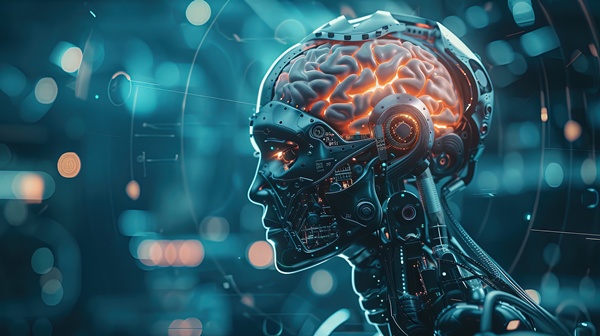
[robot brain thinking learning, Photo credit to Pixabay]
OpenAI introduced ‘ChatGPT Image 2.0’ on the 21st, a generative model optimized for professional use, such as full design drafts.
ChatGPT Image 2.0 is available on both ChatGPT and Codenx, and advanced output features based on ChatGPT Image Thinking are going to be provided to Plus and Pro subscribers.
OpenAI announced that the model can precisely render small text and complex layouts, with a significant leap in the text accuracy for multiple languages, including Korean and English.
This announcement has garnered significant interest because the image generation AI market has long been dominated by Google’s Nano Banana.
Previous OpenAI models have been criticized as inferior to Nano Banana, which had already achieved high levels of realistic and professional grade utility.
With this latest update, OpenAI aims to increase the adoption rate of ChatGPT Image within the professional and practical business sector.
The 2.0 model can deliver results with significantly higher utility by precisely incorporating detailed user instructions compared to its previous models.
It delivers improved results in technically challenging parts, such as relationships and placements of objects, tiny text rendering, icon, user interface, and dense, intricate layouts.
The model supports aspect ratios ranging from 3:1 to 1:3 and accurately reproduces various styles, such as photography, comics, and cinema, thereby expanding its utility in variety environments.
Another significant enhancement is in multilingual rendering.
While previous models often produced incorrect characters in some languages such as Korean and Chinese, the new model has significantly improved these issues.
OpenAI has enhanced the text rendering quality for a lot of languages in this model, including Korean, Japanese, Chinese, Hindi, and Bengali.
The ability to produce multiple images at once has also been enhanced, with the model now capable of generating up to 10 images at once.
2.0 is OpenAI’s inaugural thinking based image model.
When a user requests a specific image task, the model can search for real time information on the web to incorporate relevant details into the generation or merge multiple generated images into one output.
The company anticipates that its advanced text rendering and thinking capabilities will enable a wide range of applications, such as advertisings, infographics, educational contents, and web creation.
By selecting the ‘Thinking’ or ‘Pro’ models in ChatGPT, users can access advanced processes such as web based information retrieval, multi image generation from a single prompt, and result verification.
This enables a seamless transition from idea generation to the materialization of validated, high quality outputs.
Competition in the generative AI image market is intensifying.
OpenAI’s introduction of its new model coincided with Adobe Summit, the flagship event of Adobe, a longtime strong player in the image software field.
Following the global viral sensation of creating images using ChatGPT early last year, Google has also been consistently rolling out its Nano Banana series of image generation tools.
On April 15th, Adobe also introduced its Firefly AI Assistant, which enables high level design tasks through natural images.
The field of AI image generation is rapidly expanding, with not only AI companies, but also traditional companies related to the image software industry joining this race.
- Yongjun Cho / Grade 11
- The American School of Bangkok Green Valley