
![THE HERALD STUDENT REPORTERS [US]](/assets/images/logo_student_us.png)
![THE HERALD STUDENT REPORTERS [Canada]](/assets/images/logo_student_ca.png)

Blood test could predict the early stage of Alzheimer’s disease
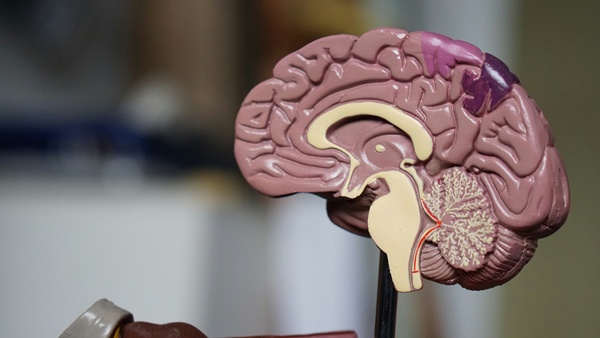
[Photography of brown brain deco. Photo credit to Unsplash]
On March 17, 2026, the NIH (National Institutes of Health) announced that blood tests using a protein called p - tau217 could predict the timeline and early stage of Alzheimer’s disease.
This advancement builds upon the initial finding, which only allowed clinicians to detect the protein and look at the possibility of the patient having Alzheimer’s disease in the future.
Compared to the previous research, the new discovery on the blood test could establish more detailed predictions, including the predictions of the age at which the p - tau217 will first appear.
P-tau217 functions as a biomarker that indicates tau tangle and amyloid plaques, which are the primary hallmarkers of Alzheimer's disease.
It is a significant advancement from the primary method of Alzheimer's disease detection, such as PET scans and cerebrospinal fluid analysis, which took a long time and were often not accessible to all patients.
Previously, people were only able to detect or notice the disease after the severe loss of memory , limiting treatment options
For this new finding, researchers developed the Alzheimer's clock model using data from individuals who underwent the p - tau217 test multiple times.
The findings suggest that as the technology continues to develop, the test could help estimate when Alzheimer’s disease is likely to appear with one simple blood test.
With an aging population and an average life span in modern society, the rate of patients with Alzheimer’s disease is also increasing globally, according to Alzheimer’s Disease International.
As the number of cases continues to rise, the new findings about a blood test predicting the progress of Alzheimer's are expected to play a crucial role in improving medical care for patients in modern society.
For instance, patients could receive a faster diagnosis from the doctor even before recognizable symptoms of Alzheimer’s disease, since one essential problem of Alzheimer’s disease is that the toxic proteins build up a lot before the symptoms show up.
Early detection of the disease is crucial because it allows patients to take early action and helps doctors to provide personalized care in the early stage.
Furthermore, the technology could continue to develop extensively by researching more effective treatments for the disease.
Nevertheless, the blood test couldn’t be fully established yet due to various issues.
The FDA (U.S. Food and Drug Administration) clarified that the blood test is not intended as a screening or stand-alone diagnostic test.
The blood testing method will need further validation in a diverse population to ensure that it is accurate enough for use with individual patients.
On the other hand, ethical application and the possibility of misdiagnosis could be the possible concerns for using the blood testing method for the detection.
Overall, this innovative approach represents a major step forward in neuroscience and could lead to further development in medical fields not only for Alzheimer’s disease, but also for other diseases.
The development signals a broader shift in modern medicine toward more predictive and preventive healthcare.

- Chloe Hyeonseo Chae / Grade 10
- Korea International School (Jeju Campus)