
![THE HERALD STUDENT REPORTERS [US]](/assets/images/logo_student_us.png)
![THE HERALD STUDENT REPORTERS [Canada]](/assets/images/logo_student_ca.png)

Artemis ll launches to the moon and back, first time since 1972
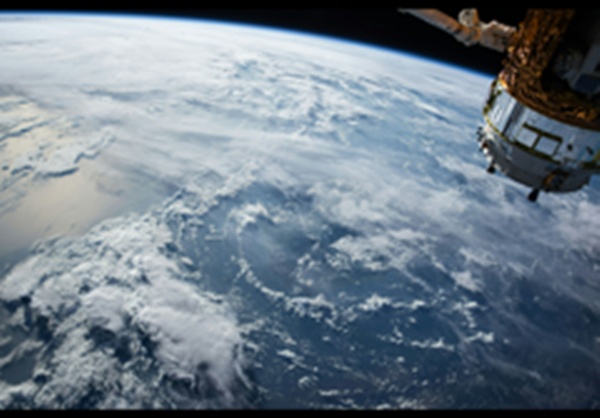
[Ocean clouds seen from space. Photo Credit to unsplash]
After a series of date shifts, the National Aeronautics and Space Administration (NASA) announced that the Artemis ll crewed Moon mission will be launched no earlier than April 1st, 2026.
This week, Project Artemis ll launches to the Moon and back, carrying three American astronauts—Commander Reid Wiseman, Pilot Victor Glover, and Mission Specialist Christina Koch from NASA-and one Canadian astronaut, Jeremy Hansen, from the Canadian Space Agency (CSA).
The mission has quickly garnered global attention as it is the first crewed mission to the Moon in over fifty years since three astronauts traveled to Earth’s only natural satellite during the historic Apollo 17 mission on July 20, 1972.
Analysts anticipate that the Artemis ll launch will draw 400,000 spectators near Launch Complex 39B, Kennedy Space Center in Florida where the mission is scheduled for blastoff.
Another notable aspect of the project is that NASA’s newest spacecraft Orion is launching on the Space Launch System (SLS), which is the “only rocket that can send Orion, astronauts, and cargo directly to the Moon in a single launch”, producing approximately 15% more thrust than its forerunner: the Saturn V rocket.
However, the project’s technological advancements are not confined to rocketry and aerospace engineering; this year, NASA envisions a bigger picture that holds both scientific and symbolic significance for the future of mankind.
The overarching goal of the lunar flyby is to pave a way for deep-space navigation in order to ultimately build a sustainable, permanent human presence and settlement in the future.
While the astronauts will only be circumnavigating during this mission as is often misconstrued by the public, through validating life support systems and proving the capability of the new aerospace technology adapted in the spacecraft, the agency aims to prepare for the mission of Artemis lll which includes the actual Moon landing.
Additionally, NASA has also announce that the administration is hoping to establish a permanent Moon base in the next seven years through scientific research and testing of the Artemis project.
The mission is critical also because it will ensure a reliable and routine flight for future pioneers of the Moon and more to come.
Furthermore, the Artemis ll mission serves as a monumental opportunity for a NASA—CSA partnership, fostering more technology and support for the Artemis project as the two government agencies continue to work in tandem.
While a considerable aspect of the project is about peaceful collaboration, there has also been a rising tension between two world powers on the other side of the story.
There have been indications of a new space race between the United States and China, with the conflict accelerating a second competition and expediting the process of racing to establish the first Moon base after claiming the resources at the lunar South Pole.
The Artemis project is just the beginning of a new era of aerospace history, serving as a catalyst for future explorations and innovations. Until then, as Neil Armstrong once said—“that’s one small step for [a] man, one giant leap for mankind”—a sentiment that still echoes as humanity returns to the Moon this week.

- Rachel Oum / Grade 9
- Lake Forest Academy