
![THE HERALD STUDENT REPORTERS [US]](/assets/images/logo_student_us.png)
![THE HERALD STUDENT REPORTERS [Canada]](/assets/images/logo_student_ca.png)

Hemifusome: A wider understanding about cells is opened
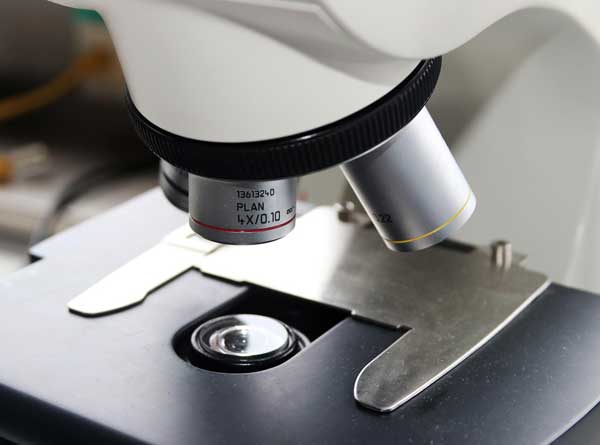
[Microscope. Photo Credits to Pixabay]
On June 25, 2025, the journal Nature Communications officially announced the discovery of a new mammalian cell organelle: the hemifusome.
This revelation is the result of the collaborative efforts of Dr. Ebrahim’s team at the University of Virginia School of Medicine and Dr. Bechara Kachar and his colleagues from National Institutes of Health.
Over the past 85 years, models, structures, and concepts of the human cell had remained the same until now.
Due to this long, unchanged understanding about cells over the past few years, this discovery was groundbreaking and significant for scientists.
This organelle had been found to be located inside the cytoplasm of the cell- the jelly-like substance which fills the cell, consisting mainly of water, salts, and organic molecules, as well as creates a structure for all components within the cell, protecting them from any damage.
Hemifusome was found to play a primary role when it came to cell transportation and communication.
According to Dr. Ebrahim, a biophysicist at the University of Virginia, the organelle is “like discovering a new recycling center inside the cell.”
The hemifusome consists of heterotypic vesicle pairs, two different types of small sacs within the cell system formed by the membrane commonly used to move substances around.
Its main role involves the cell’s delivery storage, waste management, and transport of substances.
From the two vesicles, it was also found that the larger one contains granular material, while the smaller one was translucent.
During the creation of hemifusome, the vesicle pairs bond together by the hemifusion diaphragm.
This had also been an unexpected and surprising finding for scientists, as the membrane had been overlooked due to the unstable looking structure.
The process goes through the reverse fusion, where the smaller vesicle is first outside of the larger one, but then gets flipped inwards, creating a snowman-like shape with the help of the proteolipid nanodroplets.
The interaction of the two vesicles ‘narrows down’ to a thin stalk, eventually breaking off to create another free internal vesicle inside of the larger one.
This process was also a newly discovered mechanism for the internal vesicles of multivesicular bodies.
Moreover, hemifusome diaphragms had been found to measure around 158 nanometers, which is ten times larger than a typical diaphragm.
This suggests that the organelle is stable, as well as a crucial part of the cell.
Furthermore, it had also been determined that the organelle makes up ten percent of the vesicular organelles, highlighting its importance in cellular functions.
Due to the process occurring too quickly, however, researchers had to use the cryo-electron tomography, where they were able to flash-freeze the movement of the organelle.
By understanding that the hemifusome has a major role in cell transport, scientists believe that this may be the key to treatments for diseases.
Their first and main focus is the Hermansky Puldak syndrome, a rare, inherited disease caused by malfunctions in cellular transport, which lead to albinism, vision issues, and such symptoms.
The discovery of the new organelle suggests that more research and analysis on cells are still required, as well as proposed new cures for diseases.
Dr. Ebrahim also added, “Finding something truly new inside cells is rare and it gives us a whole new path to explore.”
Currently, more research is being conducted to find out more about this newly discovered organelle.

- Eunseo Choi / Grade 8
- Seoul Foreign School