
![THE HERALD STUDENT REPORTERS [US]](/assets/images/logo_student_us.png)
![THE HERALD STUDENT REPORTERS [Canada]](/assets/images/logo_student_ca.png)

Climate change is threatening winter Olympic’s future
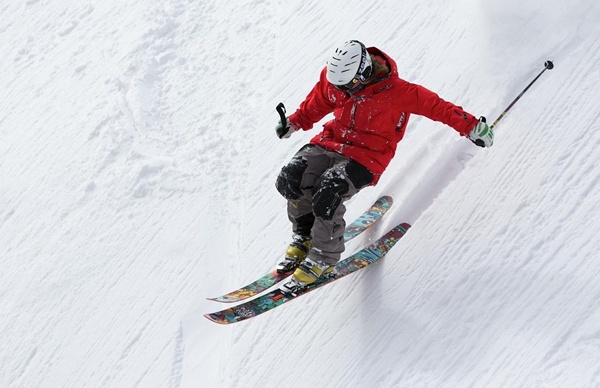
[Skiing athlete. Photo Credit to Pixabay]
On February 6, 2026, the Winter Olympics opened in Milan and Cortina d’Ampezzo, Italy, marking the first games to hold opening ceremonies outside of a main stadium.
The Winter Olympics, a beacon of excitement and celebration, now faces a growing concern for its future behind the scenes.
While millions of people celebrate the performance and their national pride at the Olympics, many environmental experts began to question the winter sports maintainability in light of the rising concern of climate change.
According to a Climate Central analysis, average temperatures in Cortina have risen over 6.4 degrees Fahrenheit since the region first hosted the Winter Olympics in 1956.
This global temperature rising trend is not just affecting host cities for the game, but it’s disrupting the entire competitive winter sports such as alpine skiing, snowboarding, and biathlon across the globe.
The rise in temperature shortens winter, makes snowfall less predictable, and many regions are struggling to maintain the best condition required for the Olympic competition.
As natural snowfall becomes increasingly inconsistent and unreliable, organizers are turning to technology for solutions, using artificial snows.
For this year’s Milan-Cortina games, organizers have already produced over 56 million cubic feet of machine-made fake snow.
The 2026 Organizing Committee planned to create 2.4 million cubic meters of artificial snow, requiring 948,000 cubic meters of water.
Furthermore, around 60% of the world's ski resorts now rely on snowmaking machines in addition to natural snowfall, and the 2022 Beijing Winter Olympics relied on almost 100% artificial snow.
While artificial snow can be one way to proceed with the Winter Olympics, it shows that there are much more costs under it where it requires large amounts of energy and water which causes further strain on the environment.
This highlights that the environmental cost of this artificial snow production creates a paradox for winter sports, which are attempting to fight climate change, creating a systematic cycle.
Beyond unreliable snowing patterns, warming temperatures also affect the athlete's safety and performance.
Softer snow and unstable ice conditions may increase the risk of injuries and disrupt training schedules for sports.
Climate scientists warn that adaptation strategies alone are not enough, and without significant global reductions of greenhouse gas emissions, the long-term sustainability of the Winter Olympics will remain highly uncertain.
A comprehensive study commissioned by the International Olympic Committee revealed that only 52 out of 93 potential host locations will remain climate-reliable by the 2050s, demonstrating how rising temperatures are threatening the future of the Winter Olympics.
The shrinking number of reliable hosting cities for the Winter Olympics suggests that the future of the games will become dependent on geographic matters, especially colder and higher altitude regions.
The impact may be much greater than just a climate issue, as global participation will decrease and undermine the unity of international countries as the Olympic spirit gets threatened.
Without urgent intervention, the Winter Olympics may become limited to only a few high-altitude regions, determining not only the location of the Olympics, but also who can participate, event structures and environmental responsibility.

- Sogyu Kim / Grade 10
- Korea International School