
![THE HERALD STUDENT REPORTERS [US]](/assets/images/logo_student_us.png)
![THE HERALD STUDENT REPORTERS [Canada]](/assets/images/logo_student_ca.png)

Prime Minister Mark Carney announces plans to build six new icebreakers in a $11.3 billion contract
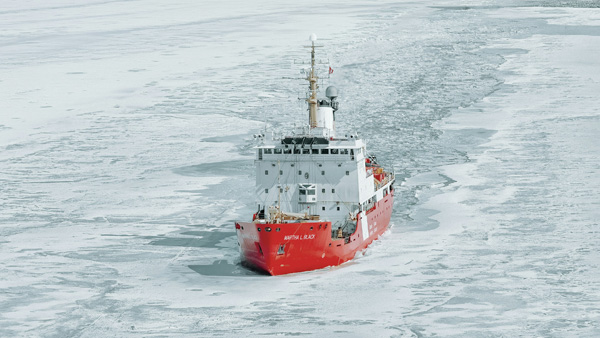
[A photo of a Canadian Icebreaker. Photo Credit to Unsplash]
On August 24th, Prime Minister Mark Carney unveiled an $11.3 billion contract to build six new icebreakers, large ships specialized in navigating and clearing thick Arctic ice, for the Canadian Coast Guard.
The vessels are planned to be built at Chantier Davie in Lévis, Quebec, marking the province’s largest shipbuilding contract in history.
The purpose of these investments is to replace Canada’s aging medium and heavy icebreakers, strengthening the nation’s ability to control its northern waters.
Operating along the nation’s east coast from Newfoundland to Montréal and in the Great Lakes during the winter, and assisting in the Arctic during warmer months, the new ships will serve several vital purposes across Canada’s waterways.
Beyond guiding and facilitating marine traffic, the icebreakers will assist vessels stuck in ice, resupply settlements and government establishments, and conduct search and rescue missions impossible for other vessels.
Construction is scheduled to begin next year, with the first vessel slated for a 2032 delivery and the full fleet being ready by 2038.
The investment is driven by Canada’s growing economic interest in the Arctic, as the icebreakers will play a critical role in keeping the nation’s northern trade routes open during harsh conditions.
Prime Minister Carney echoed this sentiment, stating “These six state-of-the-art icebreakers will keep the trade routes that carry Canadian goods to the world accessible and secure.”
However, the project’s value extends beyond international trade, as it will provide a massive boost to Canada’s domestic shipbuilding industry.
The construction of the six vessels is projected to require a variety of skilled workers including welders, technicians, and electricians, while simultaneously creating business opportunities for local businesses that supply the necessary materials and equipment needed to build them.
In total, the project is projected to generate nearly 5,000 new employment opportunities during construction and contribute $650 million into the Canadian economy during those years.
The contracted ships are the first step to a much larger plan to renew Canada’s Coast Guard fleet, as under the National Shipbuilding Strategy, the federal government predicts a total of 88 new vessels will be delivered by 2045.
The six vessels are only a small part of Canada’s broader plan to replace aging ships and in turn expand its maritime capabilities.
In what Carney’s team calls “a rapidly changing world”, the Arctic is becoming increasingly important for trade, economic stability, and national sovereignty, making a strong Coast Guard presence even more necessary.

- Ian Kim / Grade 10 Session 7
- R.E. Mountain Secondary School