
![THE HERALD STUDENT REPORTERS [US]](/assets/images/logo_student_us.png)
![THE HERALD STUDENT REPORTERS [Canada]](/assets/images/logo_student_ca.png)

Melting glaciers releasing ancient microbes: A new biological hazard
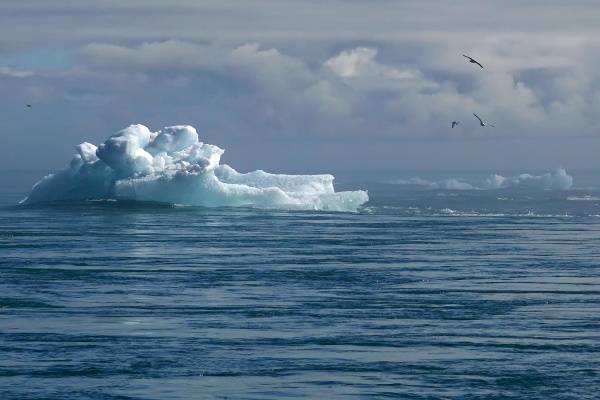
[A melting glacier with flows of meltwater, showing the effects of rising temperatures. Photo Credit to Pixabay]
In 2016, a heat wave in Siberia thawed permafrost that had stayed frozen for decades.
Buried anthrax spores became active in the year, sickening dozens of people and killing thousands of reindeer.
This was a warning sign of something much bigger: As global temperatures continue to rise, these frozen layers are beginning to melt.
Scientists are increasingly concerned that bacteria and viruses trapped for centuries could be released back into the environment.
Modern medicine has never encountered these diseases before and may not be equipped to treat them effectively.
A major concern is how little we know about these ancient microbes.
Unlike current diseases, which scientists have studied and developed treatments for, these organisms have been isolated for long periods of time.
As glaciers and permafrost thaw, buried materials such as soil, water, and even animal remains are being exposed.
This process creates new pathways for microbes to spread into ecosystems that have never been exposed to them.
Evidence indicates that this risk is real in different locations. In Siberia, a past anthrax outbreak was linked to melting permafrost that exposed the remains of infected animals.
Once the bacteria were released, they spread rapidly through the environment, affecting both wildlife and humans.
The outbreak proved that pathogens frozen for decades can still become active when subjected to the right conditions.
Melting glaciers are also being affected by microbes in a different way.
Certain organisms, including dark-colored algae, grow on the surface of ice and absorb sunlight.
The result is a reduction in the ice’s natural ability to reflect heat, causing it to melt faster.
As the ice melts, water carries these microorganisms into nearby ecosystems, where they can influence nutrient cycles.
Scientists are particularly concerned about how these microbes might affect human health.
Because they have been frozen for so long, people and animals may have little or no natural immunity against them.
The immune system typically builds its defenses through exposure, and when bodies encounter a pathogen, immune cells learn to recognize it and respond more quickly the next time it occurs.
However, these microbes have been sealed away in ice for thousands of years, meaning humans and animals never had the opportunity to develop that recognition.
Without prior exposure, the body has no “memory” of how to fight off the infection, which makes illness more severe or harder to treat if these ancient pathogens were to reenter the environment.
This could increase the chances of infection if exposure occurs.
Although researchers are studying these risks, there is still much that remains unknown about how these organisms might behave.
Public health researchers have offered various suggestions on how to address this serious issue.
Some researchers believe that monitoring glaciers and permafrost regions can help detect dangerous microbes early.
Other researchers emphasize that reducing global warming is the most important step, since rising temperatures are causing the problem in the first place.
Without action, the melting process will likely continue, increasing the chances of microbial release.
If harmful microbes spread, the consequences could extend to ecosystems, animals, and human populations.
Even if large outbreaks are avoided, the uncertainty surrounding these organisms presents new challenges for scientists and public health systems.
Mitigating these risks will require careful research and global cooperation.
Melting glaciers and permafrost are no longer just an environmental issue.
As temperatures continue to rise, understanding and preparing for these hidden dangers will become increasingly crucial.
Taking preemptive action can help mitigate the potential impact on future generations.

- Jayden Lee / Grade 8 Session 12
- Canyon Hills Junior High