
![THE HERALD STUDENT REPORTERS [US]](/assets/images/logo_student_us.png)
![THE HERALD STUDENT REPORTERS [Canada]](/assets/images/logo_student_ca.png)

Recent earthquake in Colombia results in over 200 deaths
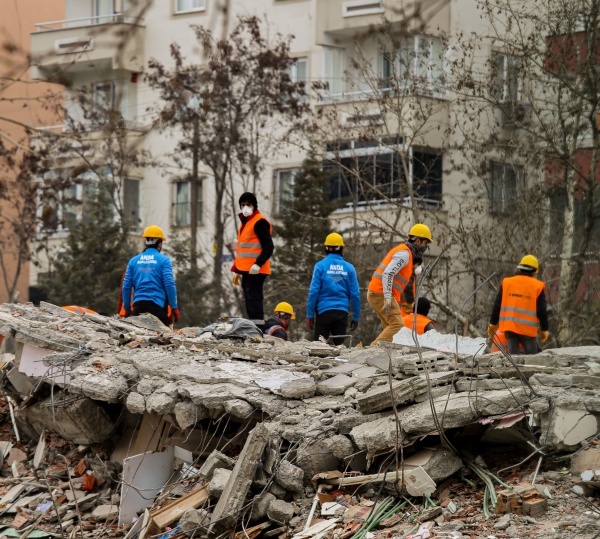
[Rescue workers on a search on destroyed buildings; Photo Credit: Pexels]
On August 10, 2026, western Colombia was severely hit by a 7.4 magnitude earthquake, claiming hundreds of lives and causing widespread devastation.
The epicenter of the earthquake was located approximately three miles east of San José del Palmar, in Colombia’s Chocó region, an area that has long struggled with high levels of poverty.
The earthquake is considered the most powerful recorded in Colombia in the 21st century.
Since the earthquake, rescue teams, government officials, and local residents have been working tirelessly, sifting through collapsed buildings for survivors while aftershocks continue to jeopardize weakened structures.
As of Aug. 13, the president of Colombia Abelardo de la Espriella reported that the death toll has risen to 281, with 3,971 injured, and 379 still missing.
According to The New York Times, while the exact rescue period remains uncertain, experts have deemed 72 hours to be the “golden” window for the best chance at survival under wreckage.
Among the victims was the son of Bahía Solano’s Mayor Jairson Leonel Valencia, Mateo Valencia, 6, who died due to his home caving in.
The governor of the Chocó region, Nubia Carolina Córdoba-Curi, expressed, “We stand wholeheartedly with (the mayor) and his entire family during this painful time.”
Multiple people who attended a candlelight vigil and the former foreign minister Luis Gilberto Murillo also expressed sorrow.
It is also important to highlight the extensive structural damage this earthquake brought.
The U.N. humanitarian aid agency noted that approximately 5,000 homes were impaired with 387 destroyed and 61 buildings collapsed.
Among the affected structures, 18 were health centers and 52 were schools, forming additional challenges for communities already struggling to recover.
In some regions, residents have reported facing disruptions to essential services such as water, electricity, as well as the problem of structural and physical damages.
Additionally, a prison with about 370 convicts collapsed during the earthquake and also caught fire, adding another emergency to the already alarming situation.
The fire resulted in four deaths and two were sent to the hospital shortly after the fire was extinguished around 1:30 am.
To demonstrate action, president De La Espriella not only relinquished traveling plans but wrote on social media, “You’re not alone. The state is present and taking action.”
According to Reuters, the World Bank announced that they had provided $200 million to Colombia to support immediate and long-term recovery efforts.
Despite this aid, the country still faces significant challenges.
Citizens have also taken matters into their own hands as well, implementing the use of an easily accessible reporting system.
On the citizen-run website, users can upload a post, register the person that is missing, search for other posts, report those found, and request contact for those they were searching for.
As of August 22, the site shows that 5,508 people were registered, yet only 1,348 were located.
Residents have also expressed their worry regarding aftershocks as 130 of them were recorded by Colombia’s geological service since the initial earthquake itself.
As Colombia transitions into the recovery phase, authorities still have the momentous task of caring for those that are injured, help locate missing people, provide basic needs, as well as reconstructing damaged communities.
Despite the rising death toll and demolition, rescue workers and residents continue their search for survivors, while communities with losses remain in mourning.
The earthquake has plunged the country into one of the most difficult predicaments in decades, with the path to recovery left.

- Yuna Cho / Grade 11
- Wesleyan School