
![THE HERALD STUDENT REPORTERS [US]](/assets/images/logo_student_us.png)
![THE HERALD STUDENT REPORTERS [Canada]](/assets/images/logo_student_ca.png)

Devastating heatwave spreads across Europe and causes countless deaths and disruption
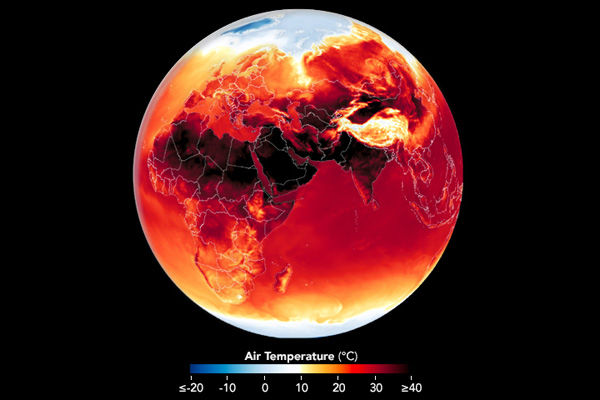
[A photo of a heatwave from space. Photo Credit to Wikipedia Commons]
On June 20, 2026, a massive heatwave struck Western Europe, and from there began spreading eastward across the continent, bringing high temperatures, increased mortality rates, and disrupting public services.
In multiple countries, temperatures exceeded 40°C during the height of the heatwave, with France in particular recording a record-breaking 43.8°C in certain regions.
As the heatwave moved eastward, countries such as Germany, Poland, and the Czech Republic suffered similarly high temperatures, signaling that the issue was more widespread than initially thought.
Many nations affected by the heatwave have made warning announcements, with the UK’s Met Office issuing extreme heat red warnings and France’s Météo-France issuing a top-level red alert.
Thus far, the heatwave has caused a significant death toll, with the World Health Organization (WHO) and national health agencies estimating that an excess of 1,300 deaths were associated with extreme heat in Europe since June 21.
During the heatwave, France alone recorded about 1,000 excess deaths nationwide, and French health officials said older people were especially affected.
Excess deaths refer to the difference between the number of deaths recorded during a specific period and the number normally expected during that same period.
This measure can help show the wider health impact of a crisis.
While these statistics do include deaths directly caused by the heatwave, such as heatstroke, they also include indirect mortalities that were brought on by the extreme living conditions of the victims
The indirect effects were not however limited to environmental conditions, as France recorded dozens of deaths caused by drowning during the heatwave period, as many attempted to cool off in lakes, rivers, and other bodies of water.
Beyond the human casualties, public services and infrastructure have also been largely affected by the heatwave, as hospitals and emergency workers faced increased demand due to illnesses and injuries that came with the increased temperatures.
Several hospitals were forced to implement special protocols that allowed them to manage the wave of patients.
Transportation services faced similar disruptions, with systems in multiple countries experiencing delays due to excessive overheating and safety concerns regarding the passengers and staff.
Energy production was also decreased, as the river used to cool the Paks nuclear power plant in Hungary rose to extremely high temperatures, making it less efficient as a coolant.
This reduction came as demand for electricity was rising, with many people using cooling systems during the heatwave.
Education institutions were also affected, as many schools in the United Kingdom were closed, citing unsafe indoor temperatures as the reason.
The crisis highlighted the inadequacy of many European buildings for extreme heat, prompting the government to advise staying indoors during peak hours, prioritize hydration, and check on vulnerable individuals.
The extreme temperatures the heatwave brings can also increase the chances of environmental risks such as wildfires, droughts, and agricultural damage as heat is plentiful, but rain is not.
Scientific organizations such as the World Meteorological Organization warn that such climate events are likely to become a frequent phenomenon as climate change continues to increase the average worldwide temperature.
Europe has been stated to be the fastest warming continent, making it highly susceptible to more heatwaves and other heat-related natural disasters in the future.
Through Europe’s reaction to the ongoing heatwave, it is clear that its infrastructure is not fit to withstand such high temperatures, and if nothing is done, future climate events may cause even more damage and be much more catastrophic than this one.

- Ian Kim / Grade 10
- R.E. Mountain Secondary School