
![THE HERALD STUDENT REPORTERS [US]](/assets/images/logo_student_us.png)
![THE HERALD STUDENT REPORTERS [Canada]](/assets/images/logo_student_ca.png)

Supreme Court shields Monsanto from pesticide lawsuits
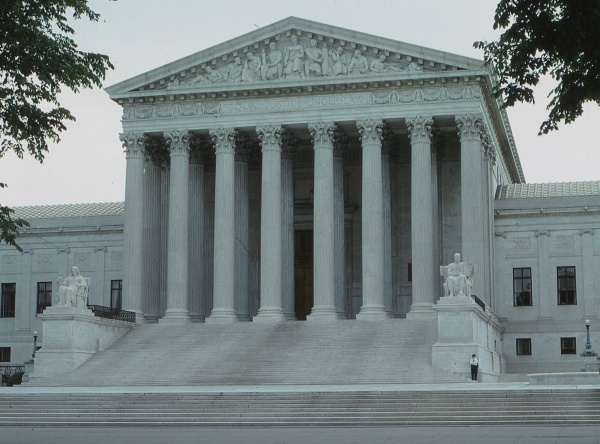
[Photo Credit: Pexels]
On Thursday, June 25th, the U.S. Supreme Court ruled that federal law restricts state lawsuits claiming that the chemical giant Monsanto failed to warn consumers that its weedkiller, Roundup, could cause cancer.
The decision is a major victory for Monsanto and its parent company, Bayer, and may limit thousands of similar failure-to-warn lawsuits, brought under state law by people who claim to have developed cancer after using the herbicide.
At the heart of the litigation is glyphosate, one of the world's most widely used herbicides and the active ingredient of Roundup.
Since being introduced in the 1970s, Roundup has become a cornerstone of modern agriculture, utilized by farmers, landscapers, and homeowners to control weeds, particularly alongside genetically modified crops designed to withstand the chemical.
In 2023, Bayer removed glyphosate from many consumer Roundup products in the U.S. amid mounting litigation, but glyphosate-based formulas remain widely used by farmers and commercial applicators.
Although the Environmental Protection Agency (EPA) and several international regulators maintain that existing evidence does not support classifying glyphosate as carcinogenic, the International Agency for Research on Cancer concluded in 2015 that glyphosate is “probably carcinogenic to humans,” helping spur years of public scrutiny.
The Supreme Court decided 7-2 in Monsanto v. Durnell that because the EPA, which is responsible for regulating pesticide labels, has not mandated a cancer warning for glyphosate, states cannot impose different requirements through lawsuits through the failure-to-warn lawsuits.
Since acquiring Monsanto in 2018, Bayer has spent billions of dollars settling claims involving Roundup and has argued that allowing states to set their own warning standards undermine a uniform federal regulatory system.
While the Court’s ruling focuses on the legal framework for warning labels rather than the science itself, it could reshape how future disputes over chemical products are fought, shifting greater authority toward federal regulators and away from state courts.
The decision came on the same day President Donald Trump ordered federal agencies to study ways to reduce pesticide exposure in the U.S. food supply, highlighting a growing tension between public concern over pesticide safety and the legal protections governing the industry.
Following increasing pressure from public health advocates and supporters of the “Make America Healthy Again” movement, the administration has sought to demonstrate greater political attention to chemical exposure, directing agencies to promote research on cumulative health effects as well as alternative agricultural practices.
However, the order provides neither new regulatory authority nor additional funding, suggesting it serves more as a statement of political interest than an immediate effort to assess and address the impact of pesticide exposure.
Its effectiveness hinges on whether federal agencies are able to pursue new regulation and research without clear directives or dedicated resources to support them as of the moment.
The juxtaposition of these developments underscore a broader tension between public concern over environmental and public health risks and the legal structures that shape industry accountability.
While political leaders increasingly acknowledge anxieties and harm around chemical exposure, the Supreme Court ruling reinforces the authority of federal agencies and limits the role of states in challenging manufacturers.
Together, these two events reveal that the debate around pesticides is no longer focused solely on the science of chemicals themselves, but also on who has the authority to determine acceptable risks and avenues for compensation for the American public.
As questions surrounding food safety and environmental health continue to gain political attention, the future of pesticide policy will be shaped by both emerging scientific evidence and legal precedents.

- Jiwoo Bang / Grade 11
- The Madeira School