
![THE HERALD STUDENT REPORTERS [US]](/assets/images/logo_student_us.png)
![THE HERALD STUDENT REPORTERS [Canada]](/assets/images/logo_student_ca.png)

Protesters set hospital on fire amid deadly Ebola outbreak
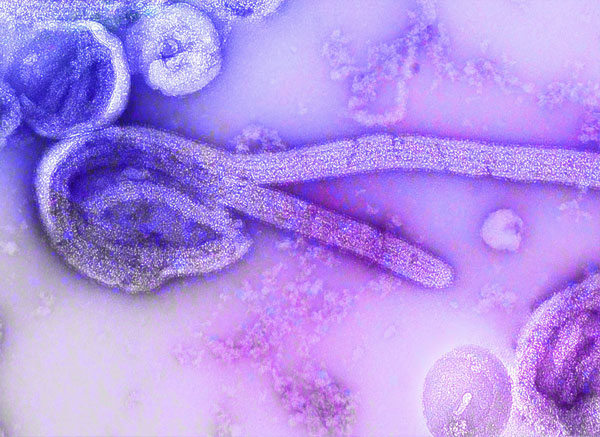
[Microscopic view of Ebola virus; Photo Credit: Unsplash]
On May 21, 2026, the Rwampara hospital in the eastern Democratic Republic of Congo (DRC) was set ablaze by an angry crowd.
The violent protest erupted after the hospital refused to release the body of a deceased person to close friends and relatives, citing Ebola safety protocols.
According to BBC News, protesters threw projectiles at the hospital and “set fire to tents that were being used as [Ebola] isolation wards.”
One hospital worker was injured during the attack on the medical facility.
In order to prevent further attacks, the police fired warning shots.
Following the incident, medical workers at the hospital were placed under military protection, highlighting the severity of the situation.
Government spokesperson Patrick Muyana condemned the protesters, stating that they did “exactly what they shouldn’t do.”
However, Luc Malembe, a local politician, pointed out how the attack reflected growing distrust among residents regarding the outbreak.
Many people in the community reportedly refused to believe that Ebola was responsible for the death.
For example, the mother of the deceased claimed the death to be from typhoid fever rather than Ebola.
Malembe stated the depth of this skepticism, saying, “To members of the most remote communities, Ebola is a White man’s invention; it doesn’t exist.”
Other residents reported to be “scared because people are dying very fast” and stated that the disease was devastating their communities.
This violent resistance comes at a time when the outbreak is leaving alarming statistics.
The World Health Organization officially classified the Ebola outbreak as high risk on Wednesday, May 20.
Notably, Dr. Tedros Adhanom Ghebreyesus, Director-General of WHO, warned that the outbreak is spreading rapidly and remains a major concern.
According to CNN, officials in the Democratic Republic of Congo reported at least 148 deaths linked to the outbreak.
Health officials have confirmed that 51 of these deaths were officially caused by Ebola.
Officials also reported 575 additional suspected Ebola cases.
The rapid acceleration of the disease’s spread is stark, with suspected Ebola cases nearly tripling within one week, according to The Guardian.
Specifically, the report indicated that suspected cases surged from 246 to approximately 750 within seven days.
Suspected deaths also rose from 65 to 177 during the same period.
The outbreak soon dispersed globally, as of May 19, two Ebola cases were confirmed in Uganda.
The following day, the US Centers for Disease Control and Prevention announced that an American aid worker in the DRC tested positive for Ebola and would be transported to Germany for treatment.
Five high-risk contacts connected to the infected American were also transported to Germany for monitoring, and another high-risk contact was sent to the Czech Republic for observation.
Scientists are now racing against time to contain the outbreak because there is currently no widely available cure for the Bundibugyo strain of Ebola.
Today, researchers are studying an antiviral drug called “Obeldesivir” to determine whether it can help prevent further infections.
Countries have responded by restricting travel to infected regions and deploying medical resources to assist local health workers.
Officials hope the outbreak can be contained before the virus spreads further internationally and also hope the conditions in the inflicted regions improve soon.

- Yuna Cho / Grade 10
- Wesleyan School