
![THE HERALD STUDENT REPORTERS [US]](/assets/images/logo_student_us.png)
![THE HERALD STUDENT REPORTERS [Canada]](/assets/images/logo_student_ca.png)

High sea faces challenge from the dilemma over domestic economy and international preservation
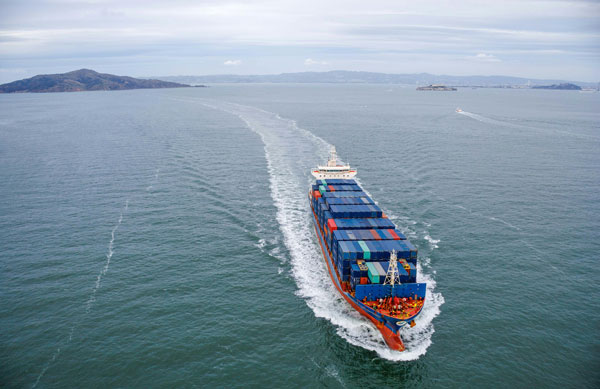
[An aerial shot of a cargo ship. Photo Credit to Pexels]
On April 24, 2025, the United States government released an executive order expanding deep sea mining within and beyond national jurisdiction, drawing worldwide concern, especially as the newly enforced BBNJ aims to strengthen the protection of the High Sea.
The White House stated that the order would “expedite the process of reviewing and issuing seabed mineral exploration licenses and commercial recovery permits in areas beyond national jurisdiction.”
The policy is widely regarded as a response to China’s restrictions on critical mineral exports and its efforts to strengthen domestic technological and energy industries.
According to The Diplomat, “that choice may secure minerals in the short term while eroding the Pacific partnerships and deterrence architecture the United States needs for long-term mineral security.”
However, critics argue that the issue goes beyond economic competition.
Because the executive order involves activities in international waters, it has sparked a debate over whether unilateral resource extraction is compatible with the global framework governing the oceans.
This concern has become particularly important since the High Seas Treaty entered into force on 17 January, 2026, after being adopted in June 2023 and ratified by numerous countries.
The treaty was established to establish legal mechanisms for monitoring and regulating human activities in areas beyond national jurisdiction.
The high sea is said to regulate the climate of the whole planet as it absorbs 30% of the CO2 emissions from humans and to facilitate migratory marine species.
However, despite the importance, the high sea area is still the least protected as such a broad marine area is difficult to be supervised, regulated and protected from damaging activity such as deep sea mining and illegal, unreported, unregulated (IUU) fishing.
High seas are also threatened by acidification, noise pollution due to the industrial ships crossing the area and chemical contamination caused by toxic metals such as mercury from coal combustion.
According to the United Nations Sustainable Development Group (UNSDG), high sea areas face unsustainable economic interests that damage and exploit the unique biodiversity of the high sea.
Many intergovernmental organizations, including the United Nations Environmental Project (UNEP), European Union (EU), United Nations Development Programme (UNDP), non-governmental organizations, including Greenpeace, High Sea Alliance (HSA), The Pew Charitable Trust, Worldwide Fund for Nature (WWF), and more, advocate for this protection movement.
According to the UNSDG, BBNJ is to protect the high seas from devastating human activities by establishing a legal framework that would enforce regulation and monitoring such actions.
BBNJ activates the United Nations Convention on the Law of the Sea (UNCLOS), considered the “constitution of the oceans”.
According to the High Sea Alliance, the treaty suggests a standard in designating Marine Protected Areas (MPAs) on the high seas, obligation on sustainable usage of ocean resources, and utilization of technology and mechanisms for fair-benefit sharing of the resources as common heritage of humankind.
The United States, however, has not ratified UNCLOS and maintains its stance to contribute to deep-sea mining in international waters.
This position has drawn criticism from international organizations.
The International Seabed Authority (ISA) expressed deep concern that the executive order of the United States might risk undermining the foundation of UNCLOS: preventing unilateral benefit that is obtained by small interest by sacrificing the many.
Although the policy appears to address domestic political concerns, its operation beyond national jurisdiction becomes a matter of violating the global ocean governance framework.
Similarly, the SAIS Review of International Affairs has highlighted, “while the domestic political debate over U.S. accession to UNCLOS remains unresolved, the limits of the treaty’s enforcing power continue to be tested by maritime stakeholders across the globe.”
As international corporations and communities take steps toward preservation, America’s rush on exploitation in the common heritage of humankind raises doubt over the expense of the many to fulfill the geopolitical interest of a nation.
This represents the possibility that the U.S. 's policy will encourage other nations and corporations to follow the path of the U.S., weakening the power of international, legitimate treaties.
Now that the application of BBNJ coincides with the U.S. mining permits, international interest is shifting to the question whether the U.S.’s unilateral exploitation of the high sea is compatible with the principle of ‘a common heritage of humankind.’

- Heo Younjae / Grade 9
- Hwa Chong International School