
![THE HERALD STUDENT REPORTERS [US]](/assets/images/logo_student_us.png)
![THE HERALD STUDENT REPORTERS [Canada]](/assets/images/logo_student_ca.png)

The ozone layer is slowly recovering after decades of damage
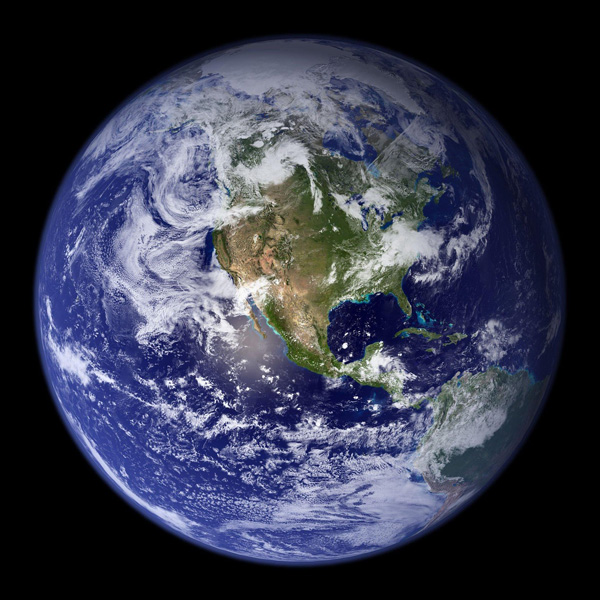
[A satellite image of Earth. Photo Credit: pixabay]
Recent reports from scientists show that the Antarctic ozone hole is one of the smallest recorded since the 1990s, indicating that the Earth’s ozone layer is slowly recovering.
According to the National Aeronautics and Space Administration (NASA), there has been a large decline in the amount of ozone-depleting chemicals.
This reflects decades of global efforts aimed at protecting the atmosphere.
This observation indicates that efforts to reduce harmful substances are having a positive impact on the environment.
Recent reports from scientists also confirm the ozone layer continues to recover gradually.
Since the mid-1900s, millions of kilotonnes of ozone-depleting substances have been released into the atmosphere.
These gases, such as chlorofluorocarbons (CFCs), silently damaged the Earth’s ozone layer in the upper atmosphere.
Many of these chemicals were commonly used in everyday products, such as hairspray and refrigeration cooling systems.
Because they were labeled as non-toxic to humans, industries widely adopted them without realizing the long-term environmental consequences.
As these gases rose into the upper atmosphere, they began damaging ozone molecules, eventually thinning out the ozone layer and creating the “Ozone Hole.”
The “Ozone Hole” acted as an opening for harmful ultraviolet-B rays to enter the atmosphere.
These rays, in turn, threatened every living organism across the planet with potential damage to the DNA.
This discovery in the 1980s led to global concerns, especially as scientists and the public had not fully realized the scale of the problem at first.
However, this global issue brought world leaders together, and the pact is still seen as one of the best examples of global unity today.
In 1987, all 197 nations agreed to participate in the Montreal Protocol, an agreement to discard harmful substances damaging the Earth.
A major achievement was reached through the treaty, as it was the first time every nation on Earth came together for such a vital purpose.
Since the treaty was signed, scientists have continued to monitor the ozone layer through satellites and weather balloons.
Although progress has been made, the process is still expected to last for generations to come, largely due to how long it takes for the atmosphere to remove CFCs.
Scientists explain that CFCs are very stable chemicals, meaning that they do not break down easily.
Because they do not easily break down, they remain in the atmosphere for long periods and slowly rise into the upper layers.
Once they reach the upper atmosphere, the ultraviolet rays eventually break them down and release chlorine atoms.
Meanwhile, the chlorine atoms continue to destroy ozone molecules, slowing down the recovery process.
Yet, researchers working for the United Nations estimate that at the current rate, the world’s atmosphere should return to its once healthy state by the year of 2040.
Unfortunately, some parts of the ozone layer were damaged more severely than others, particularly in areas above Antarctica.
Therefore, scientists predict that this region may not fully recover until around the year 2066.
Even today, countries around the world continue to work together toward a more sustainable future.
The ongoing recovery of the ozone layer highlights the importance of global cooperation in addressing environmental challenges.

- William Kim / Grade 9 Session 13
- Sunny Hills High School