
![THE HERALD STUDENT REPORTERS [US]](/assets/images/logo_student_us.png)
![THE HERALD STUDENT REPORTERS [Canada]](/assets/images/logo_student_ca.png)

New York to require social media platforms to display mental health labels
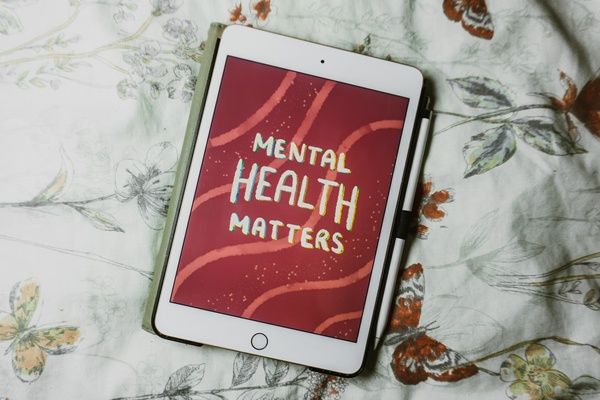
[A tablet device is displaying contexts. Photo credit to Unsplash]
Last December, New York enacted a first-of-its-kind state law mandating social media platforms with certain design features to display warning labels that alert young users to potential health risk, stated by governor Kathy Hochul.
The legislation, signed by Kathy Hochul, mandates warnings for platforms that employ features such as algorithmic feeds, autoplay, like counts, and infinite scroll which state officials say can encourage compulsive engagement among young users.
Under the law, platforms must display the warning labels upon a user’s initial access to a covered feature and periodically thereafter, and these notices cannot be dismissed or bypassed.
State officials said the goal is to ensure users are consistently informed of potential mental health impacts and risks of social media usage.
The State of New York is enforcing this legislation strictly, making the no hiding requirement and assigning the penalties up to $5,000 per violation.
This legislation follows the increasing data and research about social media usage and mental health concerns.
With increased global access to the internet, approximately 90% of teenagers in New York have been reported to be using social media.
A New York lawsuit blames social media for its addictive nature, sometimes promoting dangerous challenges, which can possibly cause accidents.
For instance, the “Subway Surfing" challenge, fueled by an addictive algorithm, has resulted in the death of two girls who were following the trend.
The U.S. Centers for Disease Control and Prevention (CDC) has also reported that frequent social media use is associated with poor mental health outcomes among adolescents, including an increased risk of suicide and depression.
An advocacy group supporting the new law has asserted that users deserve clearer information about the consequences of social media use.
Additionally, they hope the law will be effective in decreasing the effect of social media on negative mental health outcomes among teenagers.
On the other hand, some groups such as NetChoice, which represents various social media, argue this new law is unconstitutional.
Vice president of the group Carl Sabazo stated, “ This is an assault on free speech and the open internet by the State of New York.”
While many different aspects of child protection and freedom of speech conflict in New York, these mental health and safety concerns are not solely an issue for the state, but also for other states and neighboring nations.
Passing the bill that completely restricts social media for teenagers under 16, New Zealand has also taken steps toward social media restriction and child protection.
Increasing rates of cyberbullying, hazardous challenges, and harmful content due to social media have compelled New Zealand to make these changes.
Other nations like France, Britain, and China also started to follow this movement and make similar laws to restrict social media for teenagers, reinforcing New York to take legislative action to restrict social media.
Ultimately, increasing social media usage among teenagers has raised concerns about mental health and resulted in many countries signing bills to protect children and restrict social media.

- Chloe Hyeonseo Chae / Grade 10
- Korea International School (Jeju Campus)