
![THE HERALD STUDENT REPORTERS [US]](/assets/images/logo_student_us.png)
![THE HERALD STUDENT REPORTERS [Canada]](/assets/images/logo_student_ca.png)

U.S and Israel launches strikes on Iran
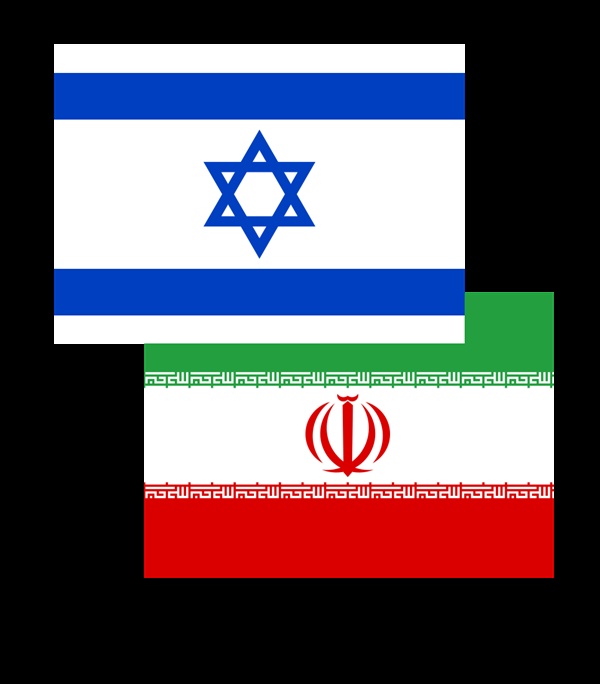
[A photo of the Iranian and Israel flag. Photo credit to Wikipedia Commons]
On February 28th, 2026, the United States and Israel launched multiple coordinated missile strikes on Iran, further escalating already high tensions between the three nations.
The strikes involved both air strikes and missile attacks on multiple Iranian cities, triggering a negative response from the government of Iran and other international bodies.
The attacks were targeted at government officials, military figures and bases, reducing the chance of both a ballistic and nuclear retaliation.
This was conducted in a joint operation between the U.S. and Israeli government codenamed “Operation Lion’s Roar,” a mission aimed at removing the “existential threat” posed by the Iranian regime.
U.S. President Donald Trump acknowledged the nation’s involvement in the attack, asserting that the attacks were necessary to dismantle Iran’s nuclear and missile programmes, which both Washington and Israel have considered threats to national security.
The government of Israel echoed the sentiment, with officials pledging that the attacks would persist “for years to come” as long as necessary to achieve lasting changes.
The attacks, initially targeting military and government sites, also reportedly struck critical infrastructure such as energy facilities, aiming to weaken Iran’s power.
Iranian officials swiftly condemned the attacks, stating that the U.S. launched their attack while Israel and themselves were engaged in negotiation.
They argued that because this attack occurred “in the midst of a diplomatic process”, they would take measures to “make the aggressors regret their criminal act”.
In response, Iranian forces launched retaliatory missiles that targeted U.S. military bases in the region, including those situated in the Gulf states where American forces are stationed.
While total casualties remain unverified, reports of civilian suffering have emerged, with satellite imagery from Vantor showing extensive damage to many urban areas.
Among the most significant damage was to an elementary school for girls located in the city of Minab, where a total of 165 people were killed.
On the offensive side, it appears that the attack was preceded by weeks of military preparation by the U.S., with naval ships and troops already positioned near Iran prior to any missile launch or airstrike.
International reactions to the attack have been sharply divided, with major parties such as the U.N. and Russia issuing their statements out to the public.
During an emergency session of the United Nations Security Council, representatives called for both sides to show restraint, and to end all hostile actions due to the risk of the conflict spreading internationally.
However, Russia took a more hostile position, demanding a halt to the acts of “armed aggression” being perpetrated against Iran, warning that this conflict could have catastrophic humanitarian consequences.
Beyond these international reactions, support for Israel from American politicians has been sharply divided, with most Republican leaders backing Trump’s actions while Democrats take the opposite stance.
While Republican members emphasize the threat of Iran’s evolving nuclear and ballistic arms, Democratic members have labelled the attack a consequence of President Trump’s habit of “lashing out”, and show their sympathy for the unnecessary American soldiers that were deployed in Iran.
Amidst the escalating international and domestic tensions, the suffering of the Iranian people should be brought to light as many are abandoning their homes in fear of further attacks, with one resident of Tehran asking, “Why are we paying this price?”, in reference to the conflict.

- Ian Kim / Grade 10 Session 5
- R.E. Mountain Secondary School